post

THE BUTTERFLY TREE ANNUAL REPORT AND ACCOUNTS 2021-2022

I am delighted to present The Butterfly Tree’s Annual Report and Accounts for 2021-22. This was our second best year since the founding of the charity in 2006. Our projects include water, food security, health, education, sustainable community projects, and an orphan support programme in Mukuni, Sekute, Musokotwane, Nyawa and Moomba Chiefdom – Kazungula District, Southern Province of Zambia.

Please scroll down the file to view the accounts, images and graphs or click on the link below to download the file.

Chairman’s Report

Despite all the challenges and the increase in demand for charity donations, I am delighted to report that 2021-22 was the second-best year since the founding of The Butterfly Tree. The only other year when we raised more money was in 2019-20, though almost a quarter of the donations were to assist with emergency food relief when The Southern and Western Provinces suffered the worst drought in over 30 years. This past year has been exceptional in all sector with Water, Food, Health, Education, Community projects and of course our all-important orphan sponsorship programme being funded.

The Butterfly Tree was voted ‘Best Orphan Charity of the Year’ – Midlands Prestige Awards

Every donation, no matter how small, counts and is greatly appreciated. Whether it be from individuals, corporate, schools, clubs or from grant aid awards every donation goes directly into our vital grass root projects in Zambia. The Butterfly Tree is the biggest contributor to education in the Kazungula District, enabling more children access to basic and secondary education.

Our substantial contribution towards malaria prevention has made a significant impact in the global fight against malaria.

My sincere thanks to fellow trustees Ann and Jackie whose invaluable input, support and encouragement help to make the charity function efficiently. Many thanks to volunteers David, Carolyn, Leah, Valerie, Meg, and Mike for giving up their free time to help with fundraising, child protection and safeguarding, and youth projects which improve the lives of orphans and vulnerable people.

As always I cannot thank enough our incredible team in Zambia, their commitment and dedication is incomparable. Having our own locally registered NGO on the ground is what makes the charity sustainable. Mupotola Siloka (secretary), Rev. Presley Mulenga (education), Martin Mushabati (community projects/sport), Stain Musungaila (malaria prevention), Natasha Mufeya, (orphan sponsorship/peer education) and Sibeso Maseka (health) successfully manage and oversee all our projects.

We are extremely grateful to all our supporters from the UK, Republic of Ireland, Guernsey, USA, Canada, Australia, Switzerland, Sweden, Norway, Portugal and Hong Kong for helping to make 2021-22 such a successful and rewarding year!

A special thanks to our major donors. During this period their donations have funded the construction of classrooms, teacher’s and medical staff houses, health posts, borehole installation, orphan sponsorship, women’s and girls’ projects, and malaria and HIV prevention programmes.

Jane Kaye-Bailey

Founder

post

Safe Water for Schools in Zambia

I am currently in Zambia visiting The Butterfly Tree projects. The temperature is 38 degrees and rising as the rainy season approaches. Not a drop of rain has fallen for almost six months and the earth is parched, the rivers are low and the streams have run dry. Earlier in the week, accompanied by Mupotola, the secretary to The Butterfly Tree in Zambia, I drove to the Nyawa Chiefdom. The village we were aiming for was Muchimbale, 100 kilometers to Zimba then a further 36 kilometers into the bush.

CIMG8691

Dry stream – Nyawa Chiefdom

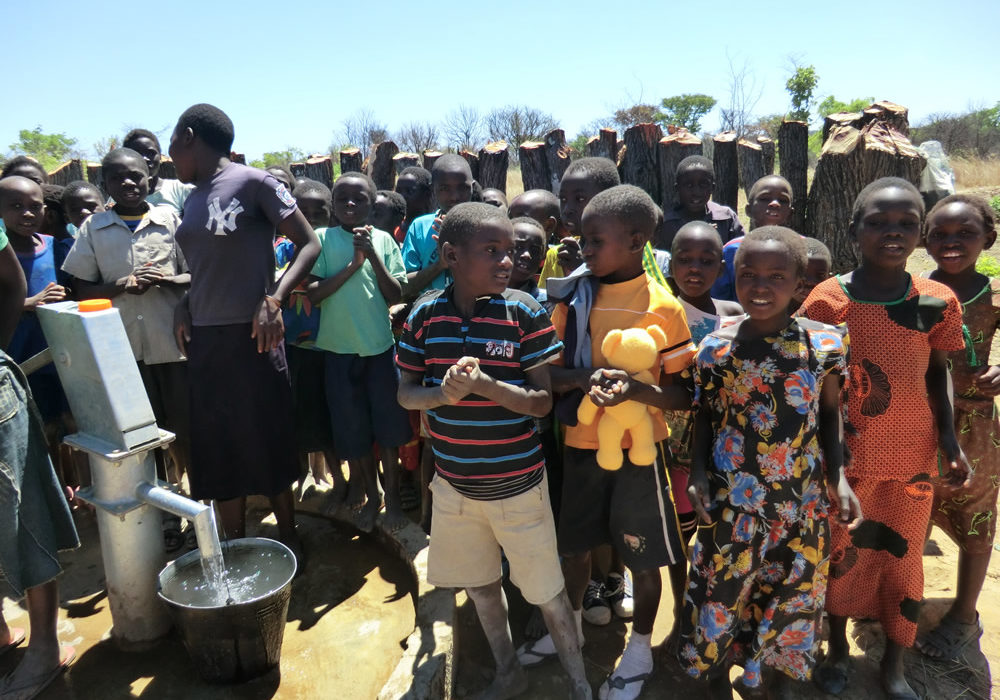
Muchimbale has a small community school where children previously had to walk 5 kilometers every day to fetch water, which took 3 hours out of their time table. Thanks to a generous donor the school now has its own bore hole and it certainly was a joyful sight to see the children pumping and drinking safe clean water. In addition this donor has funded two double latrines for the pupils. In the same Chiefdom we have installed a bore hole at Kauwe Basic School through Just a Drop’s donor Epsom College. A third bore hole has been donated by Attraction Tickets Direct. Unfortunately, as yet, we have not been able to source water at Kanimbwa School. Such are the challenges when working in these remote communities.

CIMG8721

New bore hole and hand pump – Muchimbale Community School

Heading towards the Botswana border I drove with Martin, our ground operation’s manager, to Mambova to check on the women’s shelter we have constructed at the clinic. This is for women who live in outreach villages to come and stay at the clinic prior to labour, ensuring a much safer place to deliver infants. After donating some bandages and dressing, which I gave to the resident nurse, I drove to River View Basic School where we recently completed a special education unit, kindly donated by the employees at ENRC Marketing AG, Zurich. This will open at the start of the new school year in January when thirty children, who had previously never attended school, can be taught by trained government teachers. In the meantime mainstream pupils are using it to prepare for examinations as their existing classroom is a tent.

CIMG8627

New special education classroom for in January 2014 – River View Basic School

With only one week left before I fly back to the UK much has still to be done. The official opening of the new clinic at Mahalulu, the orphan sponsorship to update, mosquito nets to distribute thanks to Saga’s support to our malaria prevention programme and text books to buy. Most schools lack text books with some classes having only one to share among 60 pupils. At times the need is so overwhelming, but the progress we are making in the Kazungula District is considerable. During a recent survey on the Mukuni Chiefdom made possible by USAID and Share, The Butterfly Tree came out on top as the best contributor! Our work has now spread to the Chiefdoms of Musokotwane, Nyawa and Sikute.

post

Water is Life

June, the start of the British summer. A time when we embrace the warm sunshine, blue skies, light evenings and hope for rain-free days. A time for planting out the garden, barbecues and Pimms. During this period many of us will be pumping thousands of litres of water onto our precious gardens, wash our cars and fill our swimming pools, while children in Zambia will be drinking from crocodile infested rivers.

Zambia has a dry, wet and winter seasons. The rains abate at the end of March and can rarely be seen before the end of October. Six months without rain, when the lush green vegetation turns into a dry parched terrain. Life in villages such as Mukuni is challenging, life in remote villages like Siamasimbi is tough. Water is life, without it nothing can grow. In the west it is taken for granted, for African children it is a precious commodity. The Butterfly Tree’s aim is to provide safe, clean water to all the outreach communities in the areas of our work. To date we have provided seven bore holes in the Mukuni Chiefdom, two of them from private donors and five thanks to our partnership with Just a Drop. We have also added nine new water tanks in Mukuni Village thanks to a generous donation from Saga Charitable Trust.

Water is life: dry stream in Mukuni, a common scene in the month of September

African woman and children can be seen all over the continent walking long distances to obtain water. Streams are shared for bathing, washing clothes, drinking water and with animals, further increasing the risk of pollution. The difference a bore hole can provide is enormous. No longer are the children at risk from being attacked by crocodiles, the risk of infection is considerably reduced. Earlier this year seven babies died in one village due to a water-born bacterial infection.

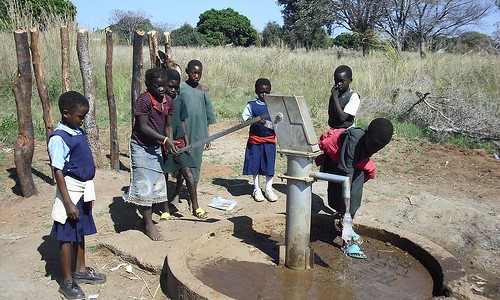
Besides providing bore holes we set up a water committee to educate the community and to teach the people basic hygiene, maintenance skills and sustainablity. Five of the schools now have their own bore hole with Indian hand pumps and two with Playpumps, a wonderful concept whereby the children can pump their own water while playing on a merry-go-round. The schools are now able to have their own gardens to support the invaluable feeding programs.

Children happily pumping water safe, clean water for Kamwi Basic School

In conjunction with Small Charities Week 14th-18th June we are promoting awareness for the one billion people who do not have access to safe, clean water and raising funds to support our water projects in Zambia.

post

Feeding Programs at Mukuni

Although the area where The Butterfly Tree works is not an area of famine there is a great deal of hunger, particularly amongst the children who have to walk a considerable distance to school. Leaving home at 4am, covering a distance of ten miles to reach school for start of lessons at 7am is not an easy task. This is to be followed by a full morning of lessons so by noon their stomachs are rumbling ferociously. For the lucky ones they will have brought food to school or been given money to buy something at the Mukuni Village market; for the less fortunate no food is available until after the return journey to their village.

Since 2006 The Butterfly has provided a nutritional feeding program, generously sponsored by Cunninghams for almost 500 vulnerable pupils at Mukuni Village. This year thanks to the generosity of Karen Lytle, a philanthropic traveler from Arizona four other schools, N’gandu, Kamwi, Siamasimbi and Katapazi have their own feeding programs. Mubiana Community School has also received funds donated by Placer Nature Centre. All of these schools, along with Mukuni, have been given seeds to grow their own vegetables to add sustainability. This year most of them had good crops of maize, the staple diet of Zambia. The maize has been dried, ground and stored for use during the dry season, now they are planting vegetables to support the feeding programs.


Feeding programs: Katapazi and Mukuni – two of the schools that grow their own maize

These feeding programs are essential, without them both attendence and performance is poor. We are encouring all the schools to become sustainable, each of them has been given a bore hole to support this program, the last to be completed is at Kamwi Basic School. This is a great boost for the schools, especially during the dry season when it is normal to go six months without rain. Once again we are grateful to Just a Drop for providing the funds for our water projects. Seeing fresh, clean water pumping from underground gives much joy to the communities and a healthier option than using rivers and streams contaminated with bacteria.

CIMG4286  CIMG4473

New bore hole & Indian hand pump for Kamwi Basic School

Both the feeding programs and water projects have made a substantial ‘Change for the Better’.