post

Development in Schools

This past few months has seen further development in a number of schools in the Mukuni, Nyawa and Sekute Chiefdoms. New classrooms, teacher’s houses, latrines, a bore hole and school shop have all been constructed thanks to generous funding from a variety of donors.

P1040189

NEW CLASSROOM S FOR N’DELE PRIMARY SCHOOL

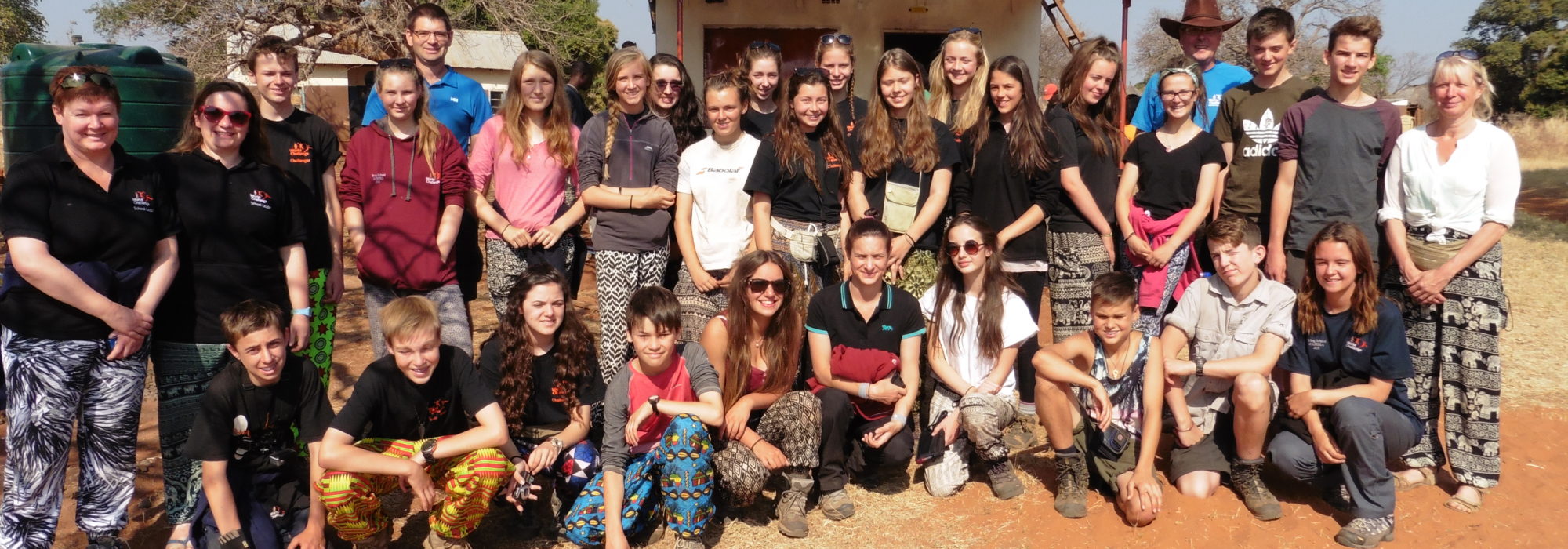
N’dele Primary School has a new 1×2 classroom block and latrines thanks to generous grant aid from the British and Foreign School Society. World Challenge volunteers from Tring School recently camped at Kamwi School where they helped to construct a school shop, painted classrooms and gave further donations to restore a teacher’s house and build a feeding programme shelter.

P1040386

JOAC COMMUNITY WORKS PROJECT VOLUNTEERS – N’GANDU SCHOOL

Group of volunteers from JOAC Community Works Project are currently working at N’gandu School where a 1×3 classroom block, two teacher’s houses and latrines are being built. Their substantial grant has brought much needed development to N’gandu School, which was built in 1947. N’dele, Kamwi and N’gandu Schools are all in the Mukuni Chiefdom.

P1040017

WORLD CHALLENGE VOLUNTEERS FROM TRING SCHOOL – KAMWI VILLAG

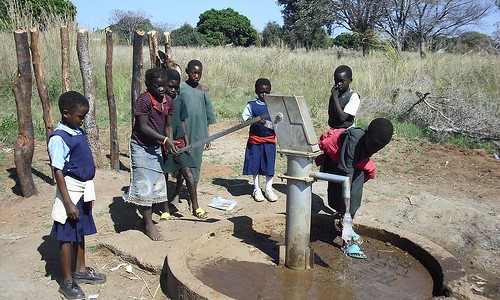
Further funding from ATD has paid for the construction of a 1×2 classroom block and latrines at Singwamba, their donation also includes latrines for Kauwe School. These schools are both in the Nyawa Chiefdom where we have also advanced Muchambile and Nampuyani Schools. A bore hole donated by Cayman Island’s Sunrise Rotary Club, Churches of Abbots Leigh and Abbots Wood, Nick Bousliman and other donors has given Bunsunga school children a chance to taste fresh water for the first time.

P1040264

BORE HOLE FOR BUNSUNGA PRIMARY SCHOOL

River View School, in the Sekute Chiefdom, has received support to complete their pre-school. With over 1,000 pupils, the school is continues to enrol more children due to the recently developed town of Kazungula. Donations from St.Paul’s School, Wigan and individuals have been used to buy the new syllabus text books for this school as well as Muchambile and Kamwi. Inner Wheel Club District 6 knitted beautiful blankets, jumpers and hats for the pupils.

P1040156

NEW JUMPERS AND HATS FOR RIVER VIEW ORPHANS

Zambia has some of the highest poverty levels in the world. It is essential for these orphaned and vulnerable children to receive a sound education.

post

May 2014 Newsletter

The Butterfly Tree has been given a licence to import two safe new malaria prevention products which could potentially save the lives of thousands of children in Zambia. The products Mozzimort and Larvamort, produced by Biotech International can not only help to prevent malaria but also river blindness (Onchocerciasis), also known as Robles disease, which is caused by a black fly. One in ten people suffer from this condition in the Northern and Western Provinces of Zambia and up until now there have been no preventative methods available.

This project dominated my three weeks in Zambia. With the assistance of Stain Musungaila, a local volunteer for The Butterfly Tree and his invaluable contacts, we presented the data to the Ministry of Health’s Enviormental Agency, the Food and Drugs Department and the Malaria Control Board. The products have been approved and we are being granted licencing for the importation, storage, transport and distribution, which will last for three years.

DSC01231

River blindness is prevelant where in areas of fast-flowing rivers

Sadly there has been a huge increase in the number of new cases of malaria in the region. Mukuni Chiefdom alone has reported over 200 new cases, in the past three years the number has been less than five. This has been caused by a number of factors – lack of insecticidal spraying, insufficient mosquito nets and prolonged heavy rains. Other clincis in the Kazungula District have reported a simular picture, which has created a great deal of concern. Our aim is to get these new products rolling before the onset of rains in November.

CIMG0064

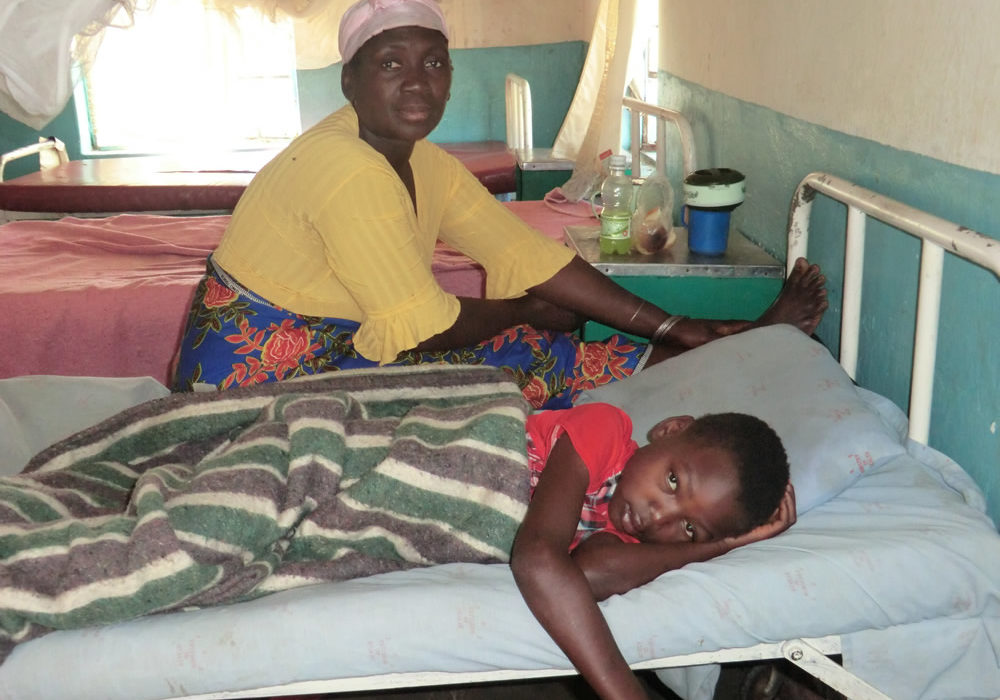
New case of malaria – young boy at Simango Rural Health Centre

With all the excitement created with the malaria prevention project I still had time to visit many other of our projects, most importantly that of water and sanitiation. Accompnied by James Baldwin and Peter Marsh, two civil engineers from our partners Just a Drop, we addressed the situation. To date we have installed some fifteen bore holes in rural schools and villages, but there are many more areas of need, one of those being Nampuyani where school children are drinking our of shallow wells shared by domestic animals. This causes diarrhoal disease, therefore we intend to add a bore hole and VIP latrines for the school.

CIMG9890

Drinking water – pupils at Nampuyani Community School

During my stay I had the pleasure of meeting the Larsgard family from Norway, who have been supporting our orphan sponsorship program for the past five years. They came to Mukuni Village and were introduced to seven of the ten orphans they are sponsoring. As always the sponsor an orphan program plays a vital roll in our work to create sustainable futures for the communities. Some three hundred individual children are currently being sponsored and five students are partaking in further education. We are introducing a workshop to teach skills for those for are unable to seek employment.

DSC01166

Thore, Marie, Peter and Gro Larsgard – generous donors from Norway

On the 7th and 8th May William Anderson and twelve of his former school friends, celebrating their 50th birthday year, spent two days volunteering for The Butterfly Tree. They had raised funds to built four community houses for widows looking after orphans. In addition they played sport with the children and donated educational supplies and clothing. William, the creative Director of The Team Works mentored grade 12 pupils and schools leavers.

CIMG9812

William Anderson and his volunteers from the UK, Zambia and Australia

As always it was both a rewarding and humbling experience visiting the many schools and villages we support. Once the new malaria prevention project takes off we aim to reach out to thousands more communites to prevent the dehabilitating malaria and Roble diseases.

Jane Kaye-Bailey

Founder

post

World Water Day 2012

Today is marks World Water Day and this year’s theme is ‘Water and Food Security’. Without water we cannot survive. The United Nations states the following’ drought caused more deaths during the last century than any other natural disaster, and Asia and Africa rank first among continents in the number of people directly affected’. Many developing countries suffer long periods of drought, food shortages are common place and children are undernourished. Whereas in the west our fridges are full and the water pours from our taps in abundance – much of it is wasted. The more food we eat the more water we need for our crops and livestock. It takes approximately 1500 litres of water to produce 1 kg of wheat, but it takes 10 times more to produce 1kg of beef. We expend vast amounts of water for cooking, washing, bathing, cleaning, watering gardens, car washing… the list goes on and on.

World Water Day

World Water Day: A dry stream – Mosokotwane Chiefdom

For those developing countries that rely on local food production water is a precious commodity. This month sees the end of the rainy season in Zambia. The African bush is green and lush, the crops are flourishing and the streams and rivers are over-flowing, but this month will see the last of the rains until October. It is crucial for the local people to grow sufficient maize, which is dried and bagged to last through the dry season. However here water cannot easily be stored and unless a community has a bore hole water shortage becomes apparent. Many areas in Zambia are without access to safe, clean water and have to rely on streams containing bacteria and crocodile-infested rivers. This water has to be used for drinking, washing, crop irrigation and livestock. When the streams run dry between August and October families walk many miles have to find a water source.

To ease the situation in the Kazungula District The Butterfly Tree has added a bore hole to every school it is supporting. This gives the children access to safe, clean water and the school to have a sustainable feeding program by growing maize and vegetables. To date we have funded seven bore holes for schools and three for local communities, a further bore hole will shortly constructed at Mukuni Village. Many more are need in these remote villages, especially where hunger widespread. Diarrhoea in all ages is common and in infants it can be fatal.

New bore hole Mukuni Zambia

New bore hole & Indian Hand Pump for Malima School – Mukuni Chiefdom

Support World Water Day by conserving our water and supporting people who suffer from water shortages and those who have no access to safe, clean water.

post

Water is Life

June, the start of the British summer. A time when we embrace the warm sunshine, blue skies, light evenings and hope for rain-free days. A time for planting out the garden, barbecues and Pimms. During this period many of us will be pumping thousands of litres of water onto our precious gardens, wash our cars and fill our swimming pools, while children in Zambia will be drinking from crocodile infested rivers.

Zambia has a dry, wet and winter seasons. The rains abate at the end of March and can rarely be seen before the end of October. Six months without rain, when the lush green vegetation turns into a dry parched terrain. Life in villages such as Mukuni is challenging, life in remote villages like Siamasimbi is tough. Water is life, without it nothing can grow. In the west it is taken for granted, for African children it is a precious commodity. The Butterfly Tree’s aim is to provide safe, clean water to all the outreach communities in the areas of our work. To date we have provided seven bore holes in the Mukuni Chiefdom, two of them from private donors and five thanks to our partnership with Just a Drop. We have also added nine new water tanks in Mukuni Village thanks to a generous donation from Saga Charitable Trust.

Water is life: dry stream in Mukuni, a common scene in the month of September

African woman and children can be seen all over the continent walking long distances to obtain water. Streams are shared for bathing, washing clothes, drinking water and with animals, further increasing the risk of pollution. The difference a bore hole can provide is enormous. No longer are the children at risk from being attacked by crocodiles, the risk of infection is considerably reduced. Earlier this year seven babies died in one village due to a water-born bacterial infection.

Besides providing bore holes we set up a water committee to educate the community and to teach the people basic hygiene, maintenance skills and sustainablity. Five of the schools now have their own bore hole with Indian hand pumps and two with Playpumps, a wonderful concept whereby the children can pump their own water while playing on a merry-go-round. The schools are now able to have their own gardens to support the invaluable feeding programs.

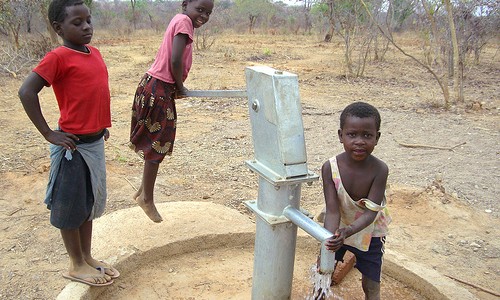
Children happily pumping water safe, clean water for Kamwi Basic School

In conjunction with Small Charities Week 14th-18th June we are promoting awareness for the one billion people who do not have access to safe, clean water and raising funds to support our water projects in Zambia.

Chise needs water

Of all the projects we have achieved in the Mukuni Cheifdom, providing a bore for rural villages has to be top of the list. Water, the most precious of commodities is taken for granted in our priveleged western world, but when you have to draw water from a crocodile infested river, receiving a bore hole can make a huge difference to a remote community.


Testing new bore hole

For the people of Chise Village life is very hard; extreme poverty and unemployment affects every family, now at least they have fresh, safe water and it was a pleasure to visit these people and receive their apprecation. Just a Drop kindly provided assistance for The Butterfly Tree to initiate this project and a Zambian company was used to drill and build the bore hole.

Bore hole needed
New bore hole needed for Chise

We have done a survey of all the villages in the Mukuni Cheifdom and our aim is to provide them all with safe, clean water. For just £3200 we can provide an entire community with a bore hole complete with pump.