post

New homes for orphans

After working in temperatures reaching 35 degrees my sons, Mike and David built four homes in Mukuni Village for the elderly and widows with orphans. The senior headman selected the most deserving cases. All four houses were given to elderly people living in delapidated conditions and having to look after their grandchildren who have been orphaned through HIV/AIDS in Zanbia. As always transport is a huge issue but the guys used our 4×4 to ferry poles, mud, grasses and water, which speeded up the project.

David & Mike with a Mukuni Widow            Widow with two orphans in her new home

Assisting the local builders – firstly Mike and David collected poles and grasses from the remote villages of Kamwi and Machenje, then the mud had to be dug from an area outside Mukuni and the water fetched from the nearest bore holes. Each house was built in stages, the poles were put into the ground, next the erecting of the roof poles, then the expert thatchers got to work – each house needed eighty bundles of straw.

Mike unloading grasses                               David carrying water

Traditionally the women add the mud to the walls, which has to be mixed with gallons of water. Ladies from the local church took part donating their earned income to the church. The final stage was to put in the floor and paint the outside of the walls. It took two days to complete each house and thanks to everyone’s generous donations and Mike and David’s hard work four families in Mukuni are now enjoying the comforts of their new homes.

The Butterfly Tree’s community houses cost £400 to build.

post

Houses for Mukuni

My sons, Mike and David have volunteered to go to Zambia to build homes for Mukuni, but first they have to raise the funds for the materials. They will work with the local builders, in temperatures reaching 35 degrees to provide at least one home for a widow and orphans during their stay. The cost per house is £400 to build a sturdy, substantial structure with a concrete floor and they will also include the mattresses.

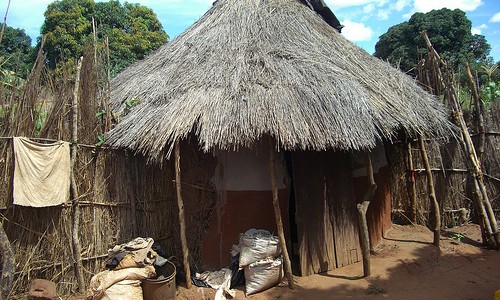
A dwelling in Mukuni Village

Accomodation, in remote communities such as Mukuni Village, is primitive. A mud-hut dwelling for most, three huts for the more prosperous families – one a sleeping quarter for men, the other for women and young children and one for the kitchen. Sadly there are thousands of widows and orphans who have no income to repair or build new homes. The thatching, which should be done every five years, becomes neglected causing leaks during the rainy season, holes appear creating drafts in the winter months when the temperatures drop to below 4 degrees.

CNV00010 by you.

Homes for Mukuni: A new house built by The Butterfly Tree

Mike and David are appealing for everyone to donate just £3, the cost of one less pint of beer on a Saturday night! All the money will be used for the project, no deductions will be made. The result – secure, spacious and comfortable accommodation for a vulnerable family, which will last for many years. To make a donation Mike has created a page, ‘The Kayes get Physcial’, on Just Giving; alternatively you can make a donation on The Butterfly Tree website.

post

Food for Mukuni

One billion people throughout the world suffer from hunger, a figure which has increased by 100 million because of the global financial crisis, says the United Nations. We are all complaining about the effect the world reccession is having upon us, but do we give a thought as to how badly people are affected in the developing countries. Lower incomes, unemployment, reduced foreign investment increase in food prices have attributed to a record number of people suffering from hunger and yet in the developed world relatively few are affected.

Zambia is in Sub-Sahara Africa where 265 million people are hungry, many relying on food aid. In the past twelve months The Butterfly Tree has provided bore holes to four schools and two villages in Mukuni now we need to use that water to develop agriculture and for the communities to grow food so that they can become sustainable. I hear sad stories of African children unable to walk the long distance to school due to lack of food, pupils who are lethargic in class and have actually seen a number of them fall asleep over their desks. I recently met a mother with twins who had walked three miles to the clinic, the infants were suffering from malnutrition, she hadn’t eaten for twenty-four hours having no money to buy a bag of ground maize. They are now receiving aid through our under fives feeding program.

CIMG2741 by you.

Food for Mukuni – mother & twins no longer suffering from hunger

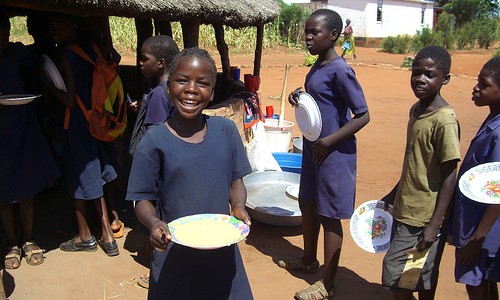
More feeding programs are needed until these communities can become sustainable, a difficult task with ever increasing costs, floods and elephants destroying crops. The Butterfly Tree is currently providing a feeding program, sponsored by Cunninghams, for over 500 vulnerable and orphaned children at Mukuni Basic School. We have just commenced a second program at Siamasimbi Basic School. Each day the pupils are given a nutritional meal of Nshima (ground maize), meat or dried fish (kapenta) and vegetables.

Feeding programs like this one at Mukuni needed for more schools

We are seeking micro-financing so that groups of widows, schools and communities can grow crops, produce goats and chickens for meat and eggs, fish farming and fruit trees.

post

Homes for Mukuni

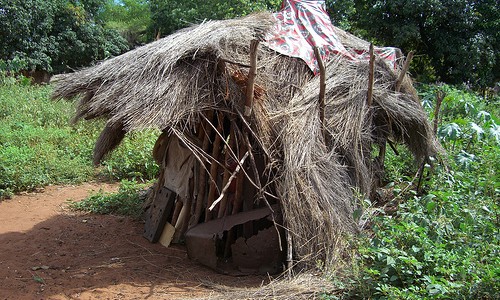
Winter in Zambia is between June and August, although the daytime temperatures can reach up to 25 degrees the nights can drop below 4 degrees. For many this is a very difficult time, with no money to repair thatched a roof, no mattress, no blanket nor warm clothes the cold nights can be unbearable. For old people with a number of ailments, sufferers of  TB and  HIV/AIDS in Zambia and new born babies it can be life-threatening. I have come across a number of people who are still sleeping with no shelter, open to the elements and snakes.

Homes for Mukuni: a dwelling in Mukuni Village

The Butterfly Tree’s community housing project provides substantial mud huts with a concrete floor for the most vulnerable. Using local builders a construction can be erected for just £400 and can comfortably sleep up to four people. One woman in Mukuni Village told me that when she lies down in her new home she thinks that she must be dreaming. To date we have built over 30 of these houses but need many more . This is the time of year when the grasses are ready for gathering, old roofs can be rethatched to keep the huts dry in the rainy season.

CNV00053 by you.

The Butterfly Tree community house

Providing a new home for a widow with young children or an elderly person who has no one to care for them can give them hope and a better chance of surving the cold winter months. A mattress at £20 and a blanket for £10 is an added bonus.

Zambia Housing Project

The Butterfly Tree has a new housing project underway. One of the most noticeable problems I spot when walking around the villages, is that despite having an abundance of land many people are living in over crowded conditions. This is due to the fact that these communities are too poor to build new homes and too many are living in one house, especially families taking in orphans due to the pandemic of HIV and AIDS in Zambia.  

Zambia House
Photo: Angela, Cynthia and Esnat outside Cynthia’s home. Five people have to share this one house. The Butterfly Tree are helping to give this family a sustainable income

Traditionally every rural Zambian homestead should have 3 houses; sleeping quarters for both the males and the females and a kitchen. However I have visited a number of families where there is only one house and as many as six people sleeping in it! Read More