post

May 2014 Newsletter

The Butterfly Tree has been given a licence to import two safe new malaria prevention products which could potentially save the lives of thousands of children in Zambia. The products Mozzimort and Larvamort, produced by Biotech International can not only help to prevent malaria but also river blindness (Onchocerciasis), also known as Robles disease, which is caused by a black fly. One in ten people suffer from this condition in the Northern and Western Provinces of Zambia and up until now there have been no preventative methods available.

This project dominated my three weeks in Zambia. With the assistance of Stain Musungaila, a local volunteer for The Butterfly Tree and his invaluable contacts, we presented the data to the Ministry of Health’s Enviormental Agency, the Food and Drugs Department and the Malaria Control Board. The products have been approved and we are being granted licencing for the importation, storage, transport and distribution, which will last for three years.

DSC01231

River blindness is prevelant where in areas of fast-flowing rivers

Sadly there has been a huge increase in the number of new cases of malaria in the region. Mukuni Chiefdom alone has reported over 200 new cases, in the past three years the number has been less than five. This has been caused by a number of factors – lack of insecticidal spraying, insufficient mosquito nets and prolonged heavy rains. Other clincis in the Kazungula District have reported a simular picture, which has created a great deal of concern. Our aim is to get these new products rolling before the onset of rains in November.

CIMG0064

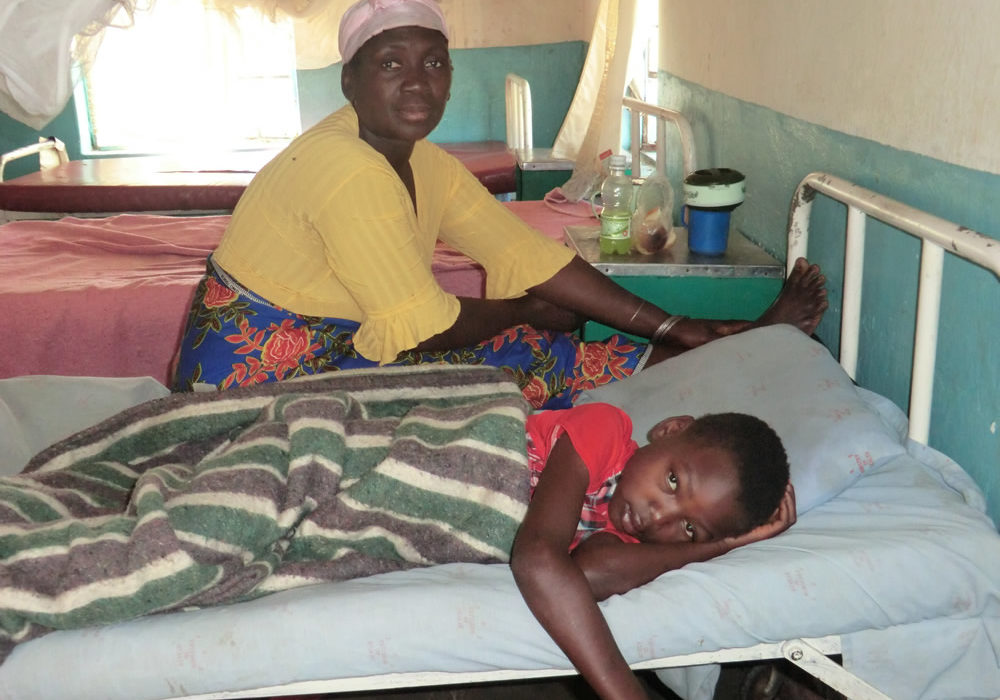
New case of malaria – young boy at Simango Rural Health Centre

With all the excitement created with the malaria prevention project I still had time to visit many other of our projects, most importantly that of water and sanitiation. Accompnied by James Baldwin and Peter Marsh, two civil engineers from our partners Just a Drop, we addressed the situation. To date we have installed some fifteen bore holes in rural schools and villages, but there are many more areas of need, one of those being Nampuyani where school children are drinking our of shallow wells shared by domestic animals. This causes diarrhoal disease, therefore we intend to add a bore hole and VIP latrines for the school.

CIMG9890

Drinking water – pupils at Nampuyani Community School

During my stay I had the pleasure of meeting the Larsgard family from Norway, who have been supporting our orphan sponsorship program for the past five years. They came to Mukuni Village and were introduced to seven of the ten orphans they are sponsoring. As always the sponsor an orphan program plays a vital roll in our work to create sustainable futures for the communities. Some three hundred individual children are currently being sponsored and five students are partaking in further education. We are introducing a workshop to teach skills for those for are unable to seek employment.

DSC01166

Thore, Marie, Peter and Gro Larsgard – generous donors from Norway

On the 7th and 8th May William Anderson and twelve of his former school friends, celebrating their 50th birthday year, spent two days volunteering for The Butterfly Tree. They had raised funds to built four community houses for widows looking after orphans. In addition they played sport with the children and donated educational supplies and clothing. William, the creative Director of The Team Works mentored grade 12 pupils and schools leavers.

CIMG9812

William Anderson and his volunteers from the UK, Zambia and Australia

As always it was both a rewarding and humbling experience visiting the many schools and villages we support. Once the new malaria prevention project takes off we aim to reach out to thousands more communites to prevent the dehabilitating malaria and Roble diseases.

Jane Kaye-Bailey

Founder

post

New homes for orphans

After working in temperatures reaching 35 degrees my sons, Mike and David built four homes in Mukuni Village for the elderly and widows with orphans. The senior headman selected the most deserving cases. All four houses were given to elderly people living in delapidated conditions and having to look after their grandchildren who have been orphaned through HIV/AIDS in Zanbia. As always transport is a huge issue but the guys used our 4×4 to ferry poles, mud, grasses and water, which speeded up the project.

David & Mike with a Mukuni Widow            Widow with two orphans in her new home

Assisting the local builders – firstly Mike and David collected poles and grasses from the remote villages of Kamwi and Machenje, then the mud had to be dug from an area outside Mukuni and the water fetched from the nearest bore holes. Each house was built in stages, the poles were put into the ground, next the erecting of the roof poles, then the expert thatchers got to work – each house needed eighty bundles of straw.

Mike unloading grasses                               David carrying water

Traditionally the women add the mud to the walls, which has to be mixed with gallons of water. Ladies from the local church took part donating their earned income to the church. The final stage was to put in the floor and paint the outside of the walls. It took two days to complete each house and thanks to everyone’s generous donations and Mike and David’s hard work four families in Mukuni are now enjoying the comforts of their new homes.

The Butterfly Tree’s community houses cost £400 to build.

post

Houses for Mukuni

My sons, Mike and David have volunteered to go to Zambia to build homes for Mukuni, but first they have to raise the funds for the materials. They will work with the local builders, in temperatures reaching 35 degrees to provide at least one home for a widow and orphans during their stay. The cost per house is £400 to build a sturdy, substantial structure with a concrete floor and they will also include the mattresses.

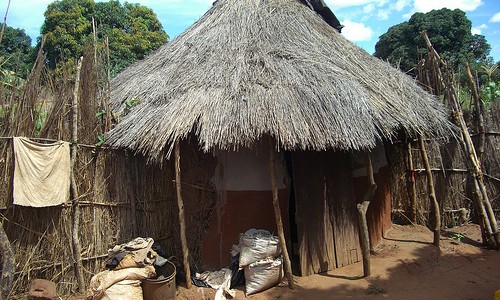
A dwelling in Mukuni Village

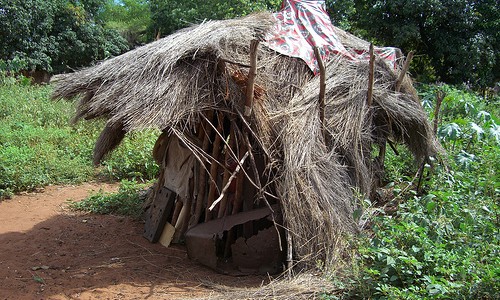
Accomodation, in remote communities such as Mukuni Village, is primitive. A mud-hut dwelling for most, three huts for the more prosperous families – one a sleeping quarter for men, the other for women and young children and one for the kitchen. Sadly there are thousands of widows and orphans who have no income to repair or build new homes. The thatching, which should be done every five years, becomes neglected causing leaks during the rainy season, holes appear creating drafts in the winter months when the temperatures drop to below 4 degrees.

CNV00010 by you.

Homes for Mukuni: A new house built by The Butterfly Tree

Mike and David are appealing for everyone to donate just £3, the cost of one less pint of beer on a Saturday night! All the money will be used for the project, no deductions will be made. The result – secure, spacious and comfortable accommodation for a vulnerable family, which will last for many years. To make a donation Mike has created a page, ‘The Kayes get Physcial’, on Just Giving; alternatively you can make a donation on The Butterfly Tree website.

post

Homes for Mukuni

Winter in Zambia is between June and August, although the daytime temperatures can reach up to 25 degrees the nights can drop below 4 degrees. For many this is a very difficult time, with no money to repair thatched a roof, no mattress, no blanket nor warm clothes the cold nights can be unbearable. For old people with a number of ailments, sufferers of  TB and  HIV/AIDS in Zambia and new born babies it can be life-threatening. I have come across a number of people who are still sleeping with no shelter, open to the elements and snakes.

Homes for Mukuni: a dwelling in Mukuni Village

The Butterfly Tree’s community housing project provides substantial mud huts with a concrete floor for the most vulnerable. Using local builders a construction can be erected for just £400 and can comfortably sleep up to four people. One woman in Mukuni Village told me that when she lies down in her new home she thinks that she must be dreaming. To date we have built over 30 of these houses but need many more . This is the time of year when the grasses are ready for gathering, old roofs can be rethatched to keep the huts dry in the rainy season.

CNV00053 by you.

The Butterfly Tree community house

Providing a new home for a widow with young children or an elderly person who has no one to care for them can give them hope and a better chance of surving the cold winter months. A mattress at £20 and a blanket for £10 is an added bonus.

Zambia Housing Project

The Butterfly Tree has a new housing project underway. One of the most noticeable problems I spot when walking around the villages, is that despite having an abundance of land many people are living in over crowded conditions. This is due to the fact that these communities are too poor to build new homes and too many are living in one house, especially families taking in orphans due to the pandemic of HIV and AIDS in Zambia.  

Zambia House
Photo: Angela, Cynthia and Esnat outside Cynthia’s home. Five people have to share this one house. The Butterfly Tree are helping to give this family a sustainable income

Traditionally every rural Zambian homestead should have 3 houses; sleeping quarters for both the males and the females and a kitchen. However I have visited a number of families where there is only one house and as many as six people sleeping in it! Read More