post

Water in Zambia

It is hard to imagine after having continual heavy rain, that some countries have no rain for months and indeed years on end. The rainy season in Zambia lasts from October until March. Since March there has not been a drop of rain and it is unlikely that any will fall for another three to four months. By the end of September the temperatures soar to over forty degrees and the earth is totally parched. So how do people survive? The answer is with great difficulty! It is particularly hard for people living in remote communities, especially if there is no bore hole in the vicinity.

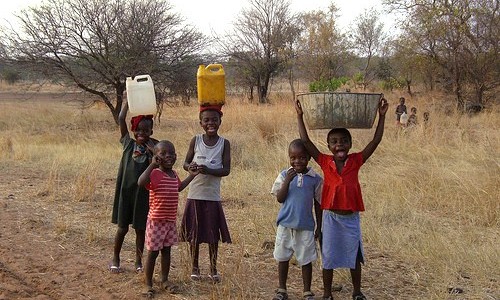
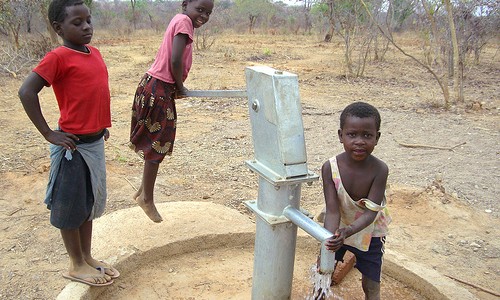
Young children carrying water home to Machenje Village

Water in Zambia: young children carrying water home to Machenje Village

All of The Butterfly Tree projects are extremely important, though none more vital than water. If we are to advance the health and education facilities we must ensure a supply of safe drinking water. Clinics cannot function without water and children cannot attend school. We are currently building a new school in the Sekute Chiefdom some 100 kilometres from Livingstone; we had to delay the start of the construction as there was no nearby source of water to mix the cement, a bore hole has now been installed. During the rainy season the streams and rivers are brimming with water. Throughout the dry season many of them become empty or stagnant, making the distance in search of water much longer than usual. There are still hundreds of villages in Zambia dependent on river or stream water, many of these are contaminated, some are infested with crocodiles, not only putting children’s health at risk but also their lives.

New bore hole for Chuunga Community School

New bore hole for Chuunga Community School

To date we have added twelve bore holes with Indian hand pumps, ten of these are in schools and two of them have play pumps. Just a Drop, one of our major donors, provided funds for six of these while others have been donated through grants and individuals. Our latest bore hole is thanks to a Canadian couple, Grant and Marilee Gibson, who visited Mukuni Village in March and have since generously raised funds amongst their family and friends to provide a bore hole at Chuunga Community School. We have now expanded our work to two other Chiefdoms in the Kazungula District, reaching out to vulnerable communities that had no access to safe, drinking water. Next time you turn on a tap or complain about the continual rain spare a thought for the numerous African children who have no source of fresh water. To help us to install more bore holes in remote villages you can make a donation or contact jane@thebutterflytree.org.uk


post

World Malaria Day 2012

‘The theme for World Malaria Day 2012 – Sustain Gains, Save Lives: Invest in Malaria – marks a decisive juncture in the history of malaria control. Whether the malaria map will keep shrinking, as it has in the past decade, or be reclaimed by the malaria parasites, depends, to a great extent, on the resources that will be invested in control efforts over the next years. In Africa, malaria deaths have been cut by one third within the last decade’. This is what is stated by the World Malaria Organisation. It remains a very sensitive issue and will only continue to be successful with global funding. Malaria is still the biggest killer of man, with 75% of all deaths occurring in children under five in sub-Sahara Africa.

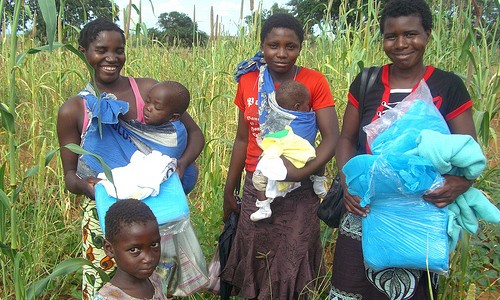
Distribution of mosquito nets - Mukuni Chiefdom

World Malaria Day: Distribution of mosquito nets – Mukuni Chiefdom

Sadly I do not see very little of this funding reaching rural communities where we work. During my recent trip to Zambia I came across more new cases of malaria than in previous years. The government are supposed to provide mosquito nets to all children under five and pregnant women. The Mukuni Chiefdom has a population of 20,000, since January 2011 the community has received only 100 nets from the Department of Health. Thanks to a generous annual donation from Saga Charitable Trust we run a malaria prevention program in the Chiefdom. In March we distributed 400 mosquito nets to outreach villages as well as purchasing malaria testing kits , which are equally important. Early testing is vital especially in this region where P. falciparum is prevalent and  may result in death within hours or a few days of infection. It is also crucial that the people are educated about the dangers of malaria as early symptoms can appear to be flu-like making it imperative to seek immediate medical advice if there is a fever. If caught in time it can be easily treated.

Twin boys from Chibale contract malaria

Twin boys from Chibale contract malaria

Today I will be attending an event to mark World Malaria Day at the Commonwealth Secretariat. A number of key speakers will address and consult on global malaria. Topics will include malaria control, women and children’s vulnerability to malaria and most alarmingly the growing resistance to malaria medications. Until there is a cure prevention is essential, providing mosquito nets and malaria testing kits will continue to be one of our main priorities. You can help us!  Donate a mosquito net for as little as £5, which could save the precious life of a child.

post

Newsletter April 2012

I have just returned from Zambia after three full weeks overseeing The Butterfly Tree projects and sourcing new ones. We are now covering areas some 100 kilometres from Livingstone, reaching out to villages in very remote areas where progress is being made in both health and education. However much more needs to be done in areas where poverty is extreme, parents are dying from AIDS related illnesses and children are hungry. Mukuni Village, due to its location, close to Livingstone and the border of Zimbabwe, suffers more than most. The HIV and AIDS statistics are incredibly high and more and more children are orphaned through this destructive disease, stressing how essential it is to continue with the orphan sponsorship program.

Old classroom at Silello, Zambia

Old classroom at Silelo

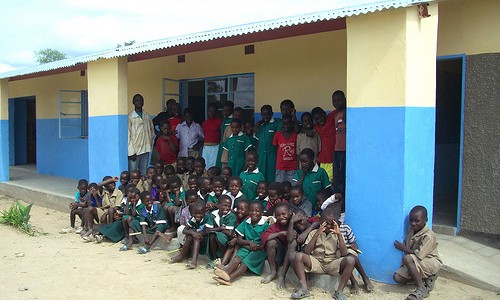
New School at Matengu, Zambia

New School at Matengu

I am pleased to report that it is not all ‘doom and gloom’ much progress is being made. The highlight of my trip was visiting the four new schools that we have constructed thanks to a hugely generous grant from the Jersey Overseas Aid Commission – three opened in January and one will open next term. All of these schools are complete with teachers’ houses and latrines with the addition of a bore hole at Malima. For the Mandandi community this is a real advancement, previously 46 children had never been to school and over 30 attended only once a week due to the long distance they had to walk to the nearest school. Each new school has received a substantial amount of stationary and equipment as a result of a grant from the British and Foreign School Society. We aim to make these schools sustainable by providing seeds to produce feeding programs as well as uniform making projects to create income generation.

Another highlight of the trip was when the new British High Commissioner, James Thornton, paid a visit to Mukuni Village. The Commission had selected The Butterfly Tree projects out of all the NGO’s operating in the Livingstone area.

New school at Silelo, Zambia

New school at Silelo

New school at Mandandi, Zambia

New school at Mandandi

Further improvements include a shelter for boarders, funded by Saga Charitable Trust, which means the older pupils can remain in Mukuni during the week. The special education project is so successful that the Provincial Department of Education has got involved. Fountaindale School has once again provided a teacher exchange program. During their recent visit the UK teachers hosted workshops for the Province, using Mukuni Special Education as a model for this exercise. It is a joy to see local children with both mental and physical disabilities receiving a sound education. The orphan sponsorship has recently had a boost, many sponsors have either visited Mukuni or found us on the internet with over twenty more children being able to join the program. Virtually 100% of our sponsored orphans recently passed to go to the high school and twenty orphans, who completed grade 12, have been able to participate in vocational courses, part of the grant from the British and Foreign School Society. A further teacher’s house at Mukuni High School has been completed as a part of a considerable donation from ENRC Marketing.

Special Education Children, Zambia

Special Education Children

Sponsored Orphans in Ngandu Zambia

Sponsored Orphans – Ngandu

Mukuni Health Centre has had a ‘facelift’ with the inclusion of a women’s shelter, kindly funded by The Besom who also funded a teacher’s house at Ngandu Basic School. Major health issues persist and once again we have funded treatment for several children. I was saddened to learn that there has been an increase in new cases of malaria during this year’s rainy season. We distributed 400 of Saga’s mosquito nets to outreach villages targeting children under five and pregnant women. While attempting to reach an area in the Sikute Chiefdom, where we are to build a new school at Sibbulo, the journey proved to be too arduous. After several hours we failed to reach the village as the track was overgrown and many areas were water-logged. It was a very frustrating journey and when we got our second slashed tyre, we could go no further. By 7.30pm the mosquito were at large – despite having insect repellent, the insects attacked through our clothing. The three of us were covered in bites and it was hours later when the rescue vehicle arrived, eventually we touched base at 12.30am. This journey confirmed just how inaccessible some of these villages are and how lucky we are to have access to anti-malaria medication.

Distribution of Mosquito Nets in Zambia

Distribution of mosquito nets

World Women's Day Zambia

World Women’s Day

As always I hosted an event for International Women’s Day – over 100 women, including the Bedyango, Chieftainess of Mukuni, were in attendance. The theme was ‘Inspiring Futures, Connecting Girls’ and the agenda included topics on how to reduce the number of teenage pregnancies, women’s health issues and sustainable income-generating activities. A challenge was offered for groups of women to submit projects and the most original would be given start-up costs and advice. I was assisted by Wendy Calloway, an accountant who is both a donor and volunteer for The Butterfly Tree and kindly offered to give all the groups expert business advice. We have had a number of volunteers who have worked at both the school and clinic, most valuable are the seven-year medical students from Sydney University and Margaret and Casey from Oregon who returned for a fourth time to develop their goat’s milk project. We are very grateful to all our donors, fund raisers and volunteers who have helped us to reach out to many more rural communities. Funds are in place for the construction of a further school, a clinic and a Music Centre.

If you would like to further support any of our projects we have a new donate facility with British Telecom.

Join us on Facebook and Twitter for daily news bulletins.

post

World Water Day 2012

Today is marks World Water Day and this year’s theme is ‘Water and Food Security’. Without water we cannot survive. The United Nations states the following’ drought caused more deaths during the last century than any other natural disaster, and Asia and Africa rank first among continents in the number of people directly affected’. Many developing countries suffer long periods of drought, food shortages are common place and children are undernourished. Whereas in the west our fridges are full and the water pours from our taps in abundance – much of it is wasted. The more food we eat the more water we need for our crops and livestock. It takes approximately 1500 litres of water to produce 1 kg of wheat, but it takes 10 times more to produce 1kg of beef. We expend vast amounts of water for cooking, washing, bathing, cleaning, watering gardens, car washing… the list goes on and on.

World Water Day

World Water Day: A dry stream – Mosokotwane Chiefdom

For those developing countries that rely on local food production water is a precious commodity. This month sees the end of the rainy season in Zambia. The African bush is green and lush, the crops are flourishing and the streams and rivers are over-flowing, but this month will see the last of the rains until October. It is crucial for the local people to grow sufficient maize, which is dried and bagged to last through the dry season. However here water cannot easily be stored and unless a community has a bore hole water shortage becomes apparent. Many areas in Zambia are without access to safe, clean water and have to rely on streams containing bacteria and crocodile-infested rivers. This water has to be used for drinking, washing, crop irrigation and livestock. When the streams run dry between August and October families walk many miles have to find a water source.

To ease the situation in the Kazungula District The Butterfly Tree has added a bore hole to every school it is supporting. This gives the children access to safe, clean water and the school to have a sustainable feeding program by growing maize and vegetables. To date we have funded seven bore holes for schools and three for local communities, a further bore hole will shortly constructed at Mukuni Village. Many more are need in these remote villages, especially where hunger widespread. Diarrhoea in all ages is common and in infants it can be fatal.

New bore hole Mukuni Zambia

New bore hole & Indian Hand Pump for Malima School – Mukuni Chiefdom

Support World Water Day by conserving our water and supporting people who suffer from water shortages and those who have no access to safe, clean water.

post

HIV and AIDS Prevention

Virtually all the work of The Butterfly Tree revolves around the HIV and AIDS orphans. At Mukuni Village almost 50% of the school children have lost one or more parent putting a huge burden on elderly grandparents and guardians and its the same story in every village. We believe that the only way to make the change is to target the younger generation and teach them all about HIV and AIDS prevention. Last year we were delighted to welcome Mutsa Marau to our team as a volunteer from London. Mutsa has a BA in Anthropoly and Socialogy, a MBA in International Business Practice and is a trained youth worker. She has written her own HIV and AIDS prevention program to train peer educators amongst school children, for the past four and a half months has worked with pupils at Mukuni.

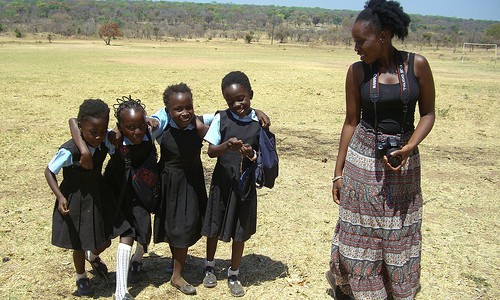
HIV and AIDS Prevention Co-ordinator - Mutsa Murau

HIV and AIDS Prevention Co-ordinator – Mutsa Murau

Now these dedicated young people are ready to ‘spread the word’ and are reaching out to other rural schools. They are educating their peers on the dangers of HIV, how to prevent it, the importance of voluntary testing and how to live with it if you are unfortunate to have been born with the virus. Other issues include teenage pregnancy and other sexually transmitted diseases and surrounding issues. With our support their aim is to reach out to all the schools we are involved with and beyond. Several of these educators are from The Butterfly Tree orphan sponsorship program and it is wonderful to see the progress they have made as individuals and a group.

Sponsored Orphan

Natasha – Peer Educator and orphan sponsored by The Butterfly Tree

Another volunteer, Brendan Poynton, is currently raising funds to build a Music Centre at Mukuni. This will give these vulnerable HIV and AIDS orphans an opportunity to hold concerts and social activities to raise funds and awareness to help the fight against this devastating disease. Through several fundraising events Brendan has almost reached his target and has

now organised a charity auction, through MUSIC EARTH RISE, to complete his task. There are some amazing lots including a guitar signed by Eric Clapton and a print signed by Ronnie Wood. If you would like to bid for any of the items please use the following click on Music Earth Rise Auction.

post

School Feeding Programmes

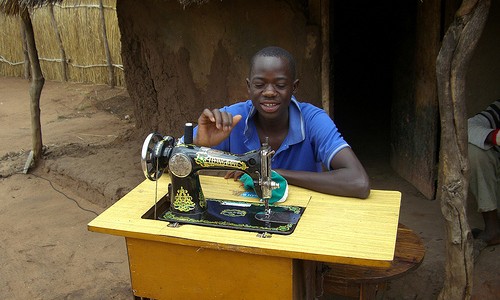
Alfred is not an orphan but his parents are seperated and have very little income. He attends school and makes clothes to generate some money. During my last visit to Mukuni Village I was horrified to learn that Alfred had attempted to commit suicide. When I was asked to counsel him I was unsure of how to approach the matter. I got a run down from his teacher and learnt that he was very intelligent and hard working. When I met this fine young man I let him explain what happened. He told me that he had helped with the housework, prepared supper for the family but had to go away for a couple of hours. When he returned, feeling very hungry after not eating since early morning, he was horrified to find that all the food had been eaten by his family. After an argument with his brother, feeling weak and deprived he went into the bushes and attempted to end his life. Miraculously he was found before it was too late.

School Feeding Programs: Albert earning a sustainable income

School Feeding Programs: Albert earning a sustainable income

When we hear of a young person in the west taking a life it is most likely to be fuelled by drug or alcohol abuse or perhaps bullying at school, but not from hunger. For these rural communites in Zambia hunger goes hand in hand with poverty and our aim is to address the situation at all the schools we support. Sustainable feeding programs are a long-term solution. For the past five years Cunninghams have provided funds for 350 vulnerable children to receive a daily nutritional meal at Mukuni. Many of these children have to walk several miles to school to commence lessons at 7am followed by an afternoon of activities. This feeding programme has helped to improve the health, concentration and stamina of numerous school pupils.

Kamwi Basic School feeding programme

Kamwi Basic School feeding programme

Without sponsorship we are unable to offer such programmes in other schools, though we do provide seeds for several schools to grow produce to supplement their diet. October to March is the rainy season in Zambia therefore it is vital to plant as much maize as possible to provide food for the dry season. The daily porridge from the World Food Program is intermittent and insufficient  for three school terms. Education is the key to overcoming problems of hunger. As for Albert, though he is not an orphan he is vulnerable, and has been added to our orphan sponsorship programme and will be given funds to develop his sewing business to create sustainability for himself and his family.

post

World AIDS Day 2011

Today marks World AIDS Day. Over 30 million people have died from AIDS related causes. An estimated 33 million are living with HIV. 2.9 million of these are children. Around 68% of from sub-Sahara Africa. Zambia has the seventh highest prevalence in the world. Today gives the opportunity to unite in the fight against HIV and to commemorate the people who have died from this devastating disease.

World AIDS Day - young Mukuni girl free of HIV

World AIDS Day – young Mukuni girl free of HIV

For the past five years The Butterfly Tree funds several HIV projects in the Mukuni Chiefdom of Zambia. These include orphan sponsorship, educational workshops and voluntary testing, treatment for the sick and an under-fives’ feeding programme to prevent the transmission of HIV from mother to child. Formula is provided to replace breast milk in HIV positive mothers. Since its conception in 2007 every infant accepted on our program has been tested negative. Due to high costs of powdered milk we have initiated a goats’ milk project to supplement the programme, with the aim of making it sustainable.

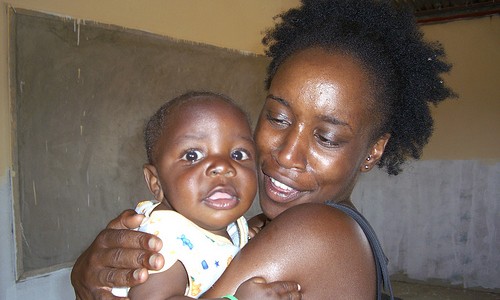
Mutsa Marau with a Mukuni baby

Mutsa Marau with a Mukuni baby

This year we have intoduced a new project thanks to Mutsa Marau, a young volunteer from London, who at our own cost, has been working in Mukuni Village for the past three months. Her HIV prevention programme to train peer educators amongst the school pupils has been a huge success. Having spent her time training these young educators, assisted by Margaret Mulenga, they are now targeting outreach villages to ‘spread the word’. Today to mark the occassion 15 members, between the ages of 14 and 20 years, will be performing at the Chief ‘s Palace as part of Mukuni Villages’ activities to mark World AIDS Day. The groups performance will include poetry reading along with the presentation of art pieces explaining how every one of them can help the prevalance of HIV in their community get to zero.

Peer educators in HIV prevention

Peer educators in HIV prevention including sponsored orphans

From the 5th – 9th December all donations to The Butterfly Tree have a chance to be doubled if made through our partners, the Big Give, during their Christmas Challenge week. To participate and help to give these young AIDS orphans a chance please donate to our programme through the Big Give website.

post

October 2011 Newsletter

During my recent visit to Zambia the nation’s general elections took place. With a change of government it is believed that Michael Sata, the new President, will increase aid to deprived areas and stamp out corruption. Although I never involve the charity in political matters, measures to improve health and education sectors need to be addressed. In the past five years I have seen a reduction in funding for  both rural schools and clinics, which have to rely more than ever on international aid for development. I came across a woman who had walked 37 kilometers, taking 13 hours, to reach Mukuni maternity clinic from Chuunga – she was nine months pregnant.

HEALTH CLINIC IN MUKUNI VILLAGE

WOMAN WALKS 37KM TO NEAREST HEALTH CLINIC IN MUKUNI VILLAGE

TEACHER’S HOUSE IN MALIMA, ZAMBIA

TEACHER’S HOUSE IN MALIMA, ZAMBIA

Thanks to substantial grant aid from the Jersey Overseas Aid Commission we are in the final stages of completing three new rural schools. The villages of Silelo and Matengu in the Musokotwane Chiefdom had to rely on unskilled teachers operating in mud hut structers. It was amazing to see the transformation, each school has three classrooms, two teachers’ houses and latrines. The community participation had been impressive and once approved these schools expect to open in January 2012. A third school at Malima, in the Mukuni Chiefom, has been given the same funding with the addition of a bore hole.

New school for Silelo, Zambia

New school for Silelo, Zambia

Silelo - old community school,  Zambia

Silelo – old community school, Zambia

The highlight of my entire trip was to see the Kamwi twins, who lost their mother and sister during childbirth. Vincent and Elvis celebrated their first birthday this month.  Last October, when I first set eyes on them, I feared they would not survive; they each weighed just over one kilo. At barely two weeks old they were sent to a remote village, after being discharged from hospital because they could offer them only water. I could not refuse to support to these helpless infants. For twelve months the charity has provided formula, clothing and blankets and all their requirements, while their grandmother has lovingly nurtured them. They have been tested free of HIV and both are happy and healthy and are testament to the vital role we play in these vulnerable communities.

Sponsored child Zambia

Vincent showing us his standing skills

Sponsored Twin Zambia

Elvis with his grandmother

October sees the start of the rains and many mud huts cannot stand up to the deluge. This is particularly hard for old people supporting orphans. In the past few months we have build an additional nine homes. Two of them have been donated by one of the volunteers, James Ashley, who helped construct the houses. Five of them were funded by ENRC marketing who have also funded a teacher’s house, HIV and AIDS prevention projects and the under five’s feeding program, which has also received support from Brady Italia. One home was donated by LSR Rotary Club, one by Aurora and the other through the Cyclothon Challenge.

New house for widow with orphans

New house for widow with orphans

Under-fives’ feeding programme

Under-fives’ feeding programme

I had the pleasure of working with a number of volunteers, Casey Short and Margaret Bax, from Oregon, returned for a third year to continue the goat’s milk project. Mutsa Marau, a young lady from London, is spending four months at Mukuni teaching peer education in HIV and AIDS prevention. Petteri Alppi a former UCL student from Finland has documented the work of The Butterfly Tree in addition to writing a much needed Maths and English Revision guide. Claire Richardson and Hannah Lainton spent time teaching business skills to women’s groups. I have been so impressed with their hard work and dedication and thank them for helping us to make a difference.

post

Education for Zambia

On Saturday I will be flying out to Zambia for what I am hoping will be a very rewarding trip. The three schools that we are currently building in the villages of Matengu and Silelo in the Musokatwane Chiefdom and Malima in the Mukuni Chiefdom should be completed by the end of October. A teachers’ house at Mukuni is also under construction as well as five community houses for widows and orphans. We have a number of volunteers who are helping to improve the Maths and English standards at Mukuni Basic School, others are assisting with the HIV and AIDS prevention projects and teaching business skills to groups of women. We are very grateful to all of them for giving up their time to volunteer for The Butterfly Tree.

Education for Zambia

Education for Zambia – New school for pupils at Matengu to open shortly

In addition to our on going sponsors the Barrington Educational Initiative, a Swiss based private charitable endeavour, has offered to support our work. We have also recently partnered with and Travelers Gift Vacations, a tour operator that provides luxury and purpose travel. A philanthropic traveler has a chance to get involved with charitable work in one of the developing countries they are visiting. The longer I work with the charity the more I realise there is a great need for collaboration amongst small charities operating in Zambia. If we endeavour to work with other organisations together we can make a bigger impact, create transparency and help to alleviate corruption. One of our new partners is Global Partners for Health, a US based charity also working in Zambia, who aim to provide vital medical supplies for our clinics.

Women from Kamwi Village gives birth to seventh child

Health education – young women from Kamwi Village gives birth to seventh child

 Tomorrow our own cycling team, The Flying Butts, will be competing in a cycle challenge at Brands Hatch. The CyclothonUK event has some thirty teams involved in the challenge to raise funds for charities. One of our volunteers, Oscar Miyanda of Basement Entertainment, is providing the music to spur the teams on. So far we have raised almost £2000 all of which will go towards our orphan programmes in Zambia. We wish Mike Kaye, Nigel Birch, Jake Wilson-Gunn and James Blackburn every success and thank them for giving up their valuable time to take part. If you would like to sponsor the team this can be done either on our website or through Just Giving, no deductions will be made.

post

August 2011 Newsletter

We have just received our figures for the 2010-2011 accounts and I am delighted to say that we have reiased a remarkable £270,000 (US$445,000. This is our best year to date. All the funds have gone directly into our grassroots projects in Zambia. Our annual report and accounts will shortly be circulated and available on the Charity Commission website.

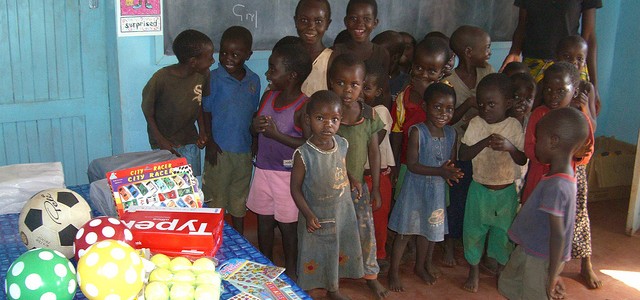
Machenje pre-school

Supplies donated to Machenje pre-school in Zambia

New football to replace ‘bag & string’

New football to replace ‘bag & string’

Despite a quiet start to the new financial year we have a had a great boost to the funds during July and August from both individuals and corporate who have visited Mukuni Village. During their cultural tour they took the opportunity to visit The Butterfly Tree projects. Donations of blankets, mosquito nets, sports equipment, stationery and clothing have helped a number of vulnerable people in addition the clinic and the school received money. Two companies Brady Italia and Canon Australia have generously offered on going support. Individual donations came from the UK, the US, Europe and Australia some of them in the form of orphan sponosrship.

The three schools we are currently building, two in the Musokotwane Chiefdom and one in Mukuni are well under way and should be completed by the end of the year. This has been made possible thanks to grant aid form the Jersey Overseas Aid Commission. We are now reaching out to fifteen schools in the Kazungula District. In addition we are supporting three clinics and many villages.

Most of our existing donors have liberally continued sponsoring orphans. The first orphans to be on our prgram have now completed grade twelve and our aim is to source funds for futher education. The Mukuni Village Fund in South Australia is now sponosring fifty orphans through our charity. However many more sponsors are needed. Due to the gloabl recession and lack of employment fra too many children, even those with parents, are failing to pay their school and exan fees.

Sponsored Orphan Zambia

Peter sponsored orphan completes school

HIV/AIDS education for Mukuni pupils

HIV/AIDS education for Mukuni pupils

This month I was invited to Zurich to receive a substantial donation from ENRC Marketing AG. Unknown to us their employees held a fundraising campaign and the benficiary was to be an NGO working in one of the many countries where they operate. The Butterfly Tree was selected for haivng the best proven records of transparency and for the fact that we are all volunteers both in the UK and Zambia. All the staff gave generously with matched funding provided by ENRC’s Head Office in London. The funds rasied totalled an amazing $27,000 and will be used to build a teacher’s house at Mukuni Village, five community house for orphans and to support our HIV/AIDS prevention for children, which will include peer education, workshops and feeding programs.

ENRC Marketing’s donation

ENRC Marketing’s donation

Saga, who’s charitable trust, is one of our major donors, are challenging their employees to raise funds to build a bore hole and a shelter for boarders at Mukuni. We have constructed an additional building at our maternity clinic, funded by The Besom, this will provide accommodation for women prior to labour who live a long distance from the clinic, ensuring a safer delivery of their babies. Thanks to Just a Drop four new latrines have been added to the Mukuni schools and a bore hole at Libala Basic School.

Women's shelter - Mukuni Village

Women’s shelter – Mukuni Village

Next month, after winning a team place we are to participate in Cyclothon UK, a cycle challenge initiated by Victor Umbugo of VU Ltd and former England rugby prop. The event is to be held at Brands Hatch on the 15th September from 7am. Our team ‘The Flying Butts’ needs your support. Donations would be greatly appreciated and can be sent to The Butterfly Tree, 3 Gannaway Court, Norton Lindsey, Warwick CV35 8JR or made using our secure Just Giving page. If you are in the area any time during the day from 4pm onwards, when the excitement reaches its peak, please go and support the team and see many of the International rugby players taking aprt. We are grateful to CRB Solutions, Academy Leasing and Geddes and Associates who are are three main sponsors.

This summer we have a number of volunteers who are working at Mukuni. Mutsa Marau is doing a peer education project to tackle the HIV/AIDS issues, Peterri Alpi from UCL is improving the maths and English standards and Hannah Lainton and Claire Richards will share their business skills with womens groups

Thank you to all the individual, corporate, schools, clubs, volunteers and philanthropers who have ginven so generously to support our grassroots projects, which have improved the lives of thousands of children and vulnerable communities in Zambia.