post

School Feeding Programmes

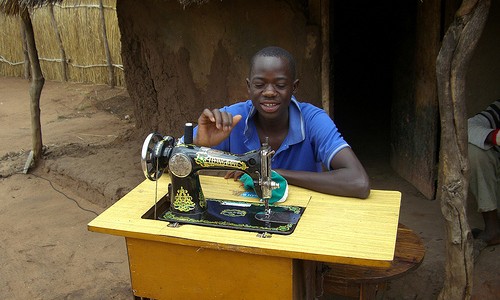
Alfred is not an orphan but his parents are seperated and have very little income. He attends school and makes clothes to generate some money. During my last visit to Mukuni Village I was horrified to learn that Alfred had attempted to commit suicide. When I was asked to counsel him I was unsure of how to approach the matter. I got a run down from his teacher and learnt that he was very intelligent and hard working. When I met this fine young man I let him explain what happened. He told me that he had helped with the housework, prepared supper for the family but had to go away for a couple of hours. When he returned, feeling very hungry after not eating since early morning, he was horrified to find that all the food had been eaten by his family. After an argument with his brother, feeling weak and deprived he went into the bushes and attempted to end his life. Miraculously he was found before it was too late.

School Feeding Programs: Albert earning a sustainable income

School Feeding Programs: Albert earning a sustainable income

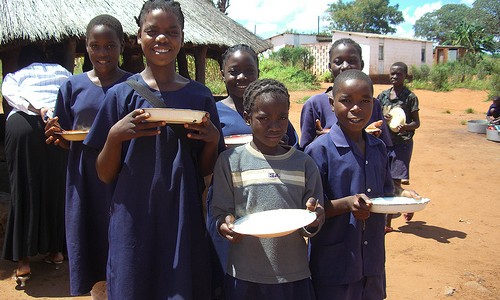
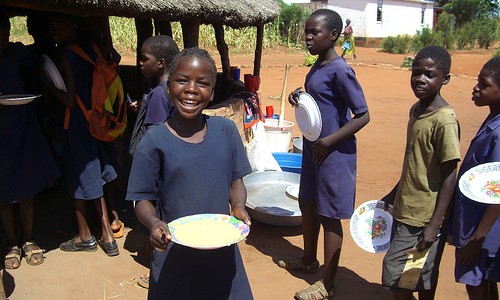
When we hear of a young person in the west taking a life it is most likely to be fuelled by drug or alcohol abuse or perhaps bullying at school, but not from hunger. For these rural communites in Zambia hunger goes hand in hand with poverty and our aim is to address the situation at all the schools we support. Sustainable feeding programs are a long-term solution. For the past five years Cunninghams have provided funds for 350 vulnerable children to receive a daily nutritional meal at Mukuni. Many of these children have to walk several miles to school to commence lessons at 7am followed by an afternoon of activities. This feeding programme has helped to improve the health, concentration and stamina of numerous school pupils.

Kamwi Basic School feeding programme

Kamwi Basic School feeding programme

Without sponsorship we are unable to offer such programmes in other schools, though we do provide seeds for several schools to grow produce to supplement their diet. October to March is the rainy season in Zambia therefore it is vital to plant as much maize as possible to provide food for the dry season. The daily porridge from the World Food Program is intermittent and insufficient  for three school terms. Education is the key to overcoming problems of hunger. As for Albert, though he is not an orphan he is vulnerable, and has been added to our orphan sponsorship programme and will be given funds to develop his sewing business to create sustainability for himself and his family.

post

Success of orphan sponsorship

Peter Liyungu was the first orphan to be accepted on The Butterfly Tree orphan sponsorship program, some five years ago, when we first started operating in Mukuni Village back in 2006. At the time despite being very intelligent, Peter had lost interest in his education after loosing both parents and having no funds to continue. A sponsor was sought and this transformed his life; as there was no high school at Mukuni Peter wanted to go to boarding school and subsequently attended Zimba High. We are also sponsoring his younger brother Mishek.

Orphan Sponsorship: Peter with brother Mishek

Orphan Sponsorship: Peter with brother Mishek – February 2007

I am delighted to say that after four years Peter has completed grade twelve and did exceedingly well in his exams.  In his own words Peter wished to thank his sponsors.

‘It is my pleasure to show my gratitude and say thank you for opening up my life to a dream come true. You are my father and my mother who would have done the same if they were alive. It takes a strong sole to take up the work of someone else.

I must let you know that I have made it through my senior secondary with 16 points which gives me the opportunity to apply for university. It is because of you that I have achieved this, your contribution to my education and my life in all was not in vain and once more thank you for making my dream come true.’

Peter Liyungu Sponsored Orphan Zambia

Peter after completing high school – February 2011

To date The Butterfly Tree has sponsored over 400 idividual orphans in addition to providing nutritional feeding programs, classrooms, teachers’ houses and bore holes holes. Our healthcare projects including HIV/AIDS and malaria prevention, boosted by a recent donation from Viking River Cruises, are all for the benefit of these vulnerable children. One of the great things about working in these rural communities is that when we can assist with the orphans’ education, there is always someone who will offer to be a guardian, whether it be a family member, a friend or even a teacher. This is by far more preferable than having to leave their village and be placed in an orphange in town.

Mukuni Feeding Program

Sponsored daily feeding program at Mukuni Village Schools

There are over 700,000 orphans in Zambia alone and they desperately need your support. Education is the only way they can get out of the cycle of poverty to enable them to better their situation. For as little as £110 per annum or just £10 per month a child’s life can be transformed. The money is used to pay for school and exam fees, books, shoes, uniform and school bag. In addition to this the children receive a daily nutritional meal, such as the one at Mukuni, sponsored by Cunninghams. The Butterfly Tree provides educational workshops, using interactive DVD’s donated by TME, teaching the pupils about the dangers of HIV/AIDS, malaria, teenage pregnancy, drugs and alcohol.

If you would like to sponsor an orphan like Peter or Mishek and make another child’s dream come true, please complete the online form or contact jane@thebutterflytree.org.uk

Listen to the orphans singing with the Mukuni Basic Choir on Youtube 

Follow our progress on Facebook

post

Feeding Programs at Mukuni

Although the area where The Butterfly Tree works is not an area of famine there is a great deal of hunger, particularly amongst the children who have to walk a considerable distance to school. Leaving home at 4am, covering a distance of ten miles to reach school for start of lessons at 7am is not an easy task. This is to be followed by a full morning of lessons so by noon their stomachs are rumbling ferociously. For the lucky ones they will have brought food to school or been given money to buy something at the Mukuni Village market; for the less fortunate no food is available until after the return journey to their village.

Since 2006 The Butterfly has provided a nutritional feeding program, generously sponsored by Cunninghams for almost 500 vulnerable pupils at Mukuni Village. This year thanks to the generosity of Karen Lytle, a philanthropic traveler from Arizona four other schools, N’gandu, Kamwi, Siamasimbi and Katapazi have their own feeding programs. Mubiana Community School has also received funds donated by Placer Nature Centre. All of these schools, along with Mukuni, have been given seeds to grow their own vegetables to add sustainability. This year most of them had good crops of maize, the staple diet of Zambia. The maize has been dried, ground and stored for use during the dry season, now they are planting vegetables to support the feeding programs.


Feeding programs: Katapazi and Mukuni – two of the schools that grow their own maize

These feeding programs are essential, without them both attendence and performance is poor. We are encouring all the schools to become sustainable, each of them has been given a bore hole to support this program, the last to be completed is at Kamwi Basic School. This is a great boost for the schools, especially during the dry season when it is normal to go six months without rain. Once again we are grateful to Just a Drop for providing the funds for our water projects. Seeing fresh, clean water pumping from underground gives much joy to the communities and a healthier option than using rivers and streams contaminated with bacteria.

CIMG4286  CIMG4473

New bore hole & Indian hand pump for Kamwi Basic School

Both the feeding programs and water projects have made a substantial ‘Change for the Better’.

post

Food for Mukuni

One billion people throughout the world suffer from hunger, a figure which has increased by 100 million because of the global financial crisis, says the United Nations. We are all complaining about the effect the world reccession is having upon us, but do we give a thought as to how badly people are affected in the developing countries. Lower incomes, unemployment, reduced foreign investment increase in food prices have attributed to a record number of people suffering from hunger and yet in the developed world relatively few are affected.

Zambia is in Sub-Sahara Africa where 265 million people are hungry, many relying on food aid. In the past twelve months The Butterfly Tree has provided bore holes to four schools and two villages in Mukuni now we need to use that water to develop agriculture and for the communities to grow food so that they can become sustainable. I hear sad stories of African children unable to walk the long distance to school due to lack of food, pupils who are lethargic in class and have actually seen a number of them fall asleep over their desks. I recently met a mother with twins who had walked three miles to the clinic, the infants were suffering from malnutrition, she hadn’t eaten for twenty-four hours having no money to buy a bag of ground maize. They are now receiving aid through our under fives feeding program.

CIMG2741 by you.

Food for Mukuni – mother & twins no longer suffering from hunger

More feeding programs are needed until these communities can become sustainable, a difficult task with ever increasing costs, floods and elephants destroying crops. The Butterfly Tree is currently providing a feeding program, sponsored by Cunninghams, for over 500 vulnerable and orphaned children at Mukuni Basic School. We have just commenced a second program at Siamasimbi Basic School. Each day the pupils are given a nutritional meal of Nshima (ground maize), meat or dried fish (kapenta) and vegetables.

Feeding programs like this one at Mukuni needed for more schools

We are seeking micro-financing so that groups of widows, schools and communities can grow crops, produce goats and chickens for meat and eggs, fish farming and fruit trees.

post

Food for Mukuni Schools

Whether it’s a school meal or a packed lunch all our children receive something to get them through the school day. When you have to leave home at 4am for a three hour walk to school to start lessons at 7am by mid morning the hunger pains begin. There is no morning porridge because the supplies have run out and your family are too poor to provide a packed lunch or fund something from the tuck shop, by noon you become tired and lethargic. The afternoon activities are a struggle, exams are even tougher, it becomes difficult to concentrate. The walk back home takes longer as the hunger increases.

This is what happens in Mukuni and many areas that have been affected by HIV and Aids in Zambia. People are so poor that a great number only eat one meal a day, comprising of ground maize, vegetables and ground nuts. Chicken, bread, rice, eggs and milk are all luxuries. To help overcome this problem The Butterfly Tree provides a daily feeding program for Mukuni schools sponsored by Cunninghams. Over 500 children receive a daily nutritional meal, vital for the growth and development of any child.

Mukuni children
Sweets a rare treat for Mukuni children

Now we need sponsors for the other schools in the Mukuni Chiefdom: Kamwi, Ngandu, Siamasimbi and Katapazi. Not only are the school children hungry, during my last visit I met a young woman from Machenje Village, she had brought her twins to Mukuni Health Centre to be weighed having walked the three miles from her home. The infants were fourteen months old, both suffering from malnutrition, the mother had no milk to feed her babies. She told me she hadn’t eaten since the day before.

The Butterfly Tree funds an under fives feeding program to replace breast milk in mothers who are HIV positive, transmission of the disease is then prevented. Unfortuantely formula in Zambia is very costly therefore we are introducing goats milk, a high source of nutrition and a way of providing a sustainable income to the milk produces. Women who have benefited from the program have voluntered to help with the running of this. These feeding programs are essential for the develpoment of children who are the future of Zambia.