post

Annual Report 2011-2012

‘Once again I am delighted to say that we have had another incredible year. Our work has expanded into a third Chiefdom and more orphans are being assisted. Despite the current climate we have once again raised a quarter of a million pounds – a huge amount for a small charity, which is even more significant when you consider that virtually 100% of this goes directly into grassroots projects’.

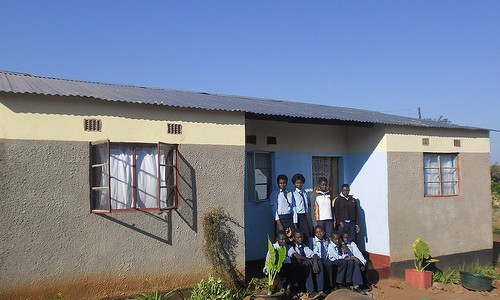
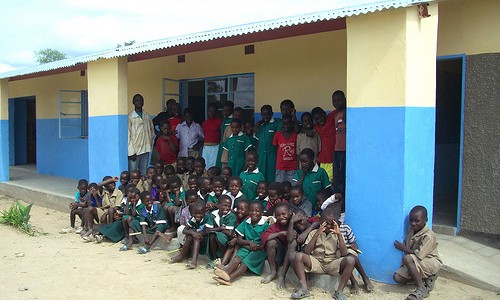
Matengu Village School

New school Matengu Village, Musokotwane Chiefdom

Follow link to view the full report and accounts: The Butterfly Tree Annual Report 2011-2012.

One of the highlights of the year was being selected, out of hundreds of charities working in Africa, as the charity having the best proven record of transparency. It was a privilege to be invited to Zurich to receive a cheque for US$27,000 from ENRC Marketing. In January three new schools were opened, for some children this was their first experience to attend school, as previously the distance had been too far for them to walk. Further funding has given us the opportunity to build more teacher’s houses and classrooms and to install bore holes for communities who previously depended on bacteria-infested streams for drinking water. Hundreds more mosquito nets have been distributed for malaria prevention and many more orphans are being sponsored. With over 700,000 orphans nationwide it is imperative to educate and improve the health facilities for these vulnerable children.

Kamwi Twins

Kamwi Twins – Vincent and Elvis at 18 months

The high point for me has been following the progress of the twin boys whose mother tragically died in childbirth along with her baby daughter. The boys are now eighteen months old, happy, healthy and running around Kamwi Village, being cared for by their grandmother. Sadly there are still far too many Zambian children who are suffering, there has been an increase in new cases of malaria and the HIV and AIDS pandemic ravages the community, affecting or infecting every family. Our new peer education program for HIV and AIDS prevention, targeting school children, is under way and this is where we hope the change can be made. We have expanded our malaria prevention program; malaria remains the biggest killer of man. We target children under five, pregnant women and those most at risk.

For the first time we have been able to send twenty school leavers for vocational courses, ranging from teaching, computing and hotel management. The special education class has received recognition from the Provincial Department of Education and is being used as a model for other areas. Very few disabled children in Zambia have access to education. This is the only rural special education unit in the entire nation. The orphan sponsorship program has increased, boosted by the Mukuni Village Fund in Australia, a group of people who sponsor fifty orphans.

Mukuni School Children

The Butterfly Tree Orphan Sponsorship recipients – Mukuni Village

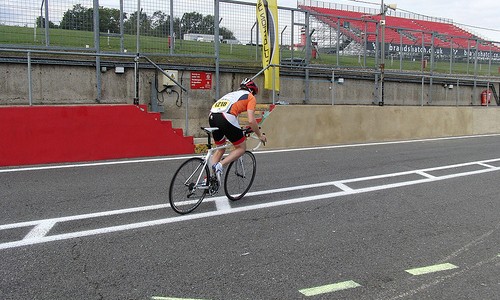
In March we were honored to receive a visit from the newly appointed British High Commissioner to Zambia; who wanted to see The Butterfly Tree in operation. We have had an increasing number of visitors to see our projects in Mukuni from individuals, groups and corporate. These visits have generated a substantial amount of income through travel philanthropy and for many it has been the highlight of their entire holiday. Once again a number of volunteers from the UK, Europe, US, Canada and Australia worked at the school, within the community and at the Mukuni Health Centre. Their input has been invaluable. We have global fundraisers, who have raised a considerable amount of money for the charity through various initiatives and sporting activities. One of the main events this year was participating in Cyclothon UK, where our team the ‘Flying Butts’ did a twelve hour cycle challenge around Brands Hatch.

CyclothonUK 2011 raising funds for The Butterfly Tree

‘The Flying Butts’ – The Butterfly Tree team after competing in CyclothonUK 2011

With so much bad publicity in the charity sector, concerning the amount of money that is deducted for administration and personal fees, we continue to work as volunteers both in the UK and Zambia, enabling all funds raised to go directly into grassroots projects. As always I am grateful to my fellow trustees, David Kaye and Miranda de Freston. Miranda’s excellent optimization skills have generated a great deal of support through our website. Also to Ann, who has taken over the role of Treasurer and Mary in administration, Frank Maiolo (our US representative), our volunteers and the many fundraisers who have generously given their time to help and support The Butterfly Tree. This new year we have taken on additions to our team are – Mutsa Marau, as HIV and AIDS Prevention Coordinator, Oscar Miyanda in public relations and Wendy Callaway to assist with the orphan sponsorship program. In Canada we are joined by Grant and Marilee Gibson who will be fundraising and promoting our work.

None of our success could have been achieved without our amazing team in Zambia – Mupotola Siloka, Presley Mulenga, Martin Mushabati, Rosemary Siloka, Sweso Museke and Stain Musengaila, the ten female representatives who oversee the orphan sponsorship program and all the teachers who run the sustainable projects for the schools. They are dedicated, hard-working and professional people who are committed to making the change. Special thanks to Chief Mukuni and several local hotels and lodges, namely Sun International and Stanley Safari Lodge and tour operators who support our work.

Jane-Kaye-Bailey

Jane Kaye-Bailey with the girls who inspired the founding of the charity

Each of our donors around the world deserves enormous thanks; unfortunately it is not possible to name every one of them individually. However I must express gratitude to our major sponsor, the Jersey Overseas Aid Commission, who has given us the opportunity to build schools and clinics in very remote areas. Other major generous sponsors include Saga Charitable Trust, Just a Drop, the British and Foreign School Society and The Besom. Through grant aid their support has funded bore holes, malaria prevention, vocational courses and health facilities. Corporate sponsors Cunninghams, Gardiff, Brady Italia, ENRC Marketing and Canon Australia have given tremendous backing and a special thanks to the BigGive, who doubled our donations through their Christmas Challenge. There are numerous schools, clubs, churches and individuals kindly donating ongoing funds to assist the thousands of orphaned children in Zambia. This coming year with your continued support we aim to reach out to children in the Sikute and Nyawa Chiefdoms.

Jane Kaye-Bailey

Chairman

Follow link to view the full Annual Report and Accounts: The Butterfly Tree Annual Report 2011-2012.

post

Water in Zambia

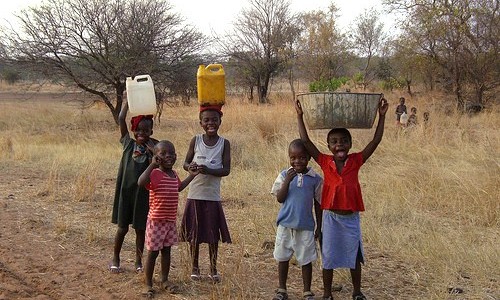
It is hard to imagine after having continual heavy rain, that some countries have no rain for months and indeed years on end. The rainy season in Zambia lasts from October until March. Since March there has not been a drop of rain and it is unlikely that any will fall for another three to four months. By the end of September the temperatures soar to over forty degrees and the earth is totally parched. So how do people survive? The answer is with great difficulty! It is particularly hard for people living in remote communities, especially if there is no bore hole in the vicinity.

Young children carrying water home to Machenje Village

Water in Zambia: young children carrying water home to Machenje Village

All of The Butterfly Tree projects are extremely important, though none more vital than water. If we are to advance the health and education facilities we must ensure a supply of safe drinking water. Clinics cannot function without water and children cannot attend school. We are currently building a new school in the Sekute Chiefdom some 100 kilometres from Livingstone; we had to delay the start of the construction as there was no nearby source of water to mix the cement, a bore hole has now been installed. During the rainy season the streams and rivers are brimming with water. Throughout the dry season many of them become empty or stagnant, making the distance in search of water much longer than usual. There are still hundreds of villages in Zambia dependent on river or stream water, many of these are contaminated, some are infested with crocodiles, not only putting children’s health at risk but also their lives.

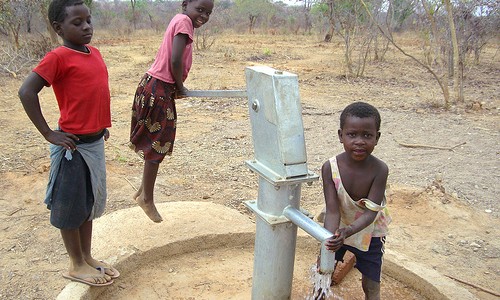
New bore hole for Chuunga Community School

New bore hole for Chuunga Community School

To date we have added twelve bore holes with Indian hand pumps, ten of these are in schools and two of them have play pumps. Just a Drop, one of our major donors, provided funds for six of these while others have been donated through grants and individuals. Our latest bore hole is thanks to a Canadian couple, Grant and Marilee Gibson, who visited Mukuni Village in March and have since generously raised funds amongst their family and friends to provide a bore hole at Chuunga Community School. We have now expanded our work to two other Chiefdoms in the Kazungula District, reaching out to vulnerable communities that had no access to safe, drinking water. Next time you turn on a tap or complain about the continual rain spare a thought for the numerous African children who have no source of fresh water. To help us to install more bore holes in remote villages you can make a donation or contact jane@thebutterflytree.org.uk


post

Corporate Social Responsibility

You do not have to be as big as Microsoft and Virgin Atlantic to get your company involved in Corporate Social Responsibility and initiatives such as Philanthropic Travel and Volunteering. ‘Corporate social responsibility is about understanding your business’ impact on the wider world and considering how you can use this impact in a positive way. Corporate Social Responsibility can also be good for your bottom line’.

For the past six years we have been involved with a number of corporates who have supported The Butterfly Tree. Cunninghams fund a feeding programme for 350 orphaned and vulnerable children, while Gardiff donated funds to build a pre-school at Mukuni in addition to supporting three teaching staff. One such initiative, which is hugely successful is that of Saga, who support a community based project in every one of their travel destinations, they also challenge their employees to participate in annual fundraising events as well as engaging their travellers.

Borders' shelter donated by Saga employees

Borders’ shelter donated by Saga employees

Last year we were selected out of hundreds of charities working in Africa, by ENRC Marketing, as the one with the best proven record of transparency. They have a huge CSR program with beneficiaries all over the world. After a business incentive trip to Mukuni Village both Brady Italia and Canon Australia have provided continued support to the charity. Other corporates have sponsored some of our fundraising events such as our team participating in CyclothonUK. You can enter your own cycling team in this challenge for 2012, which takes part at Brands Hatch on 13th September, while raising funds for The Butterfly Tree.

Feeding program at Mukuni Village

Feeding program at Mukuni Village sponsored by Cunninghams

There are several ways to have a Social Corporate Responsibility programme and partner with The Butterfly Tree, it could be with a single donation or an on going project. We involve our donors in decision making so that they can select a project they like and then receive regular feedback. A donation does not necessarily have to come directly from the corporate’s profits, it can be done through engaging their clients, customers and employees. Forming a lasting partnership can be beneficial for all parties concerned. Mukuni Village Incorporated (Australia), Black and White Accounting and Dative Studios each generously sponsor orphans. This lifts their company profile and provides much needed support to vulnerable children such as those in Zambia.

We are seeking corporate sponsorship to build more classrooms, teacher’s houses, bore holes, community houses and for the orphan sponsorship program. Your support could make a huge difference to a local community who need only the essentials in life – WATER FOOD HEALTH and EDUCATION. For more information contact jane@thebutterflytree.org.uk

post

Orphans in Zambia

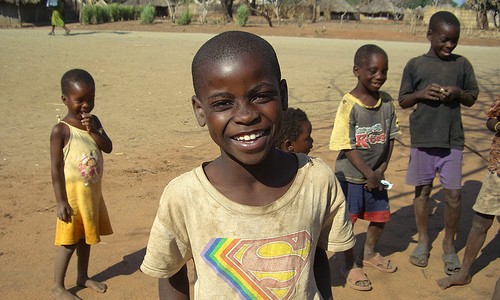
Despite having a relatively small population of just over 12 million people, there are 710,000 orphans in Zambia, primarily as a result of the HIV and AIDS pandemic. One in six adults living with HIV and longevity is barely 38. Sadly the Livingstone area, which is close to Mukuni Village, has one of the highest problems in the nation. This is due to the exposure of being both a border town and the capital of tourism. The devastation caused by this pandemic is heartbreaking, everyone in Mukuni and beyond has been infected or affected – the loss is totally overwhelming.

Orphans in Zambia at N'gandu Basic School

Orphans in Zambia at N’gandu Basic School

Poverty as always is one of the major under-lying causes, but people from every walk of life have been affected – from government to industry, agriculture and tourism, no area has escaped this virus that has caused so much devastation. According to the latest statistics from UNAIDS, at the end of 2010 there were 34 million people living with HIV and this same year 1.8 million people died from AIDS-related illnesses. Although in the past five years, both the number of new cases and deaths have declined globally, Zambia like most Southern African countries, is still suffering. Our aim is to intensify our HIV and AIDS prevention projects and increase the numbers on our orphan sponsorship programmes. To date we have sponsored over 500 individual orphans and improved the conditions for thousands of vulnerable children.

Young orphan in Mukuni Village Zambia

Young orphan in Mukuni Village Zambia

The Butterfly Tree supports a number of HIV and AIDS prevention programmes and this year we will mostly work within the schools, targeting the pupils, as we strongly believe that this is where the change can be made. As always we will continue with our orphan sponsorship programme; only this week two siblings, who had previously lost their father, have now lost their mother. If we can ensure that these vulnerable children remain in school and receive a sound education, they have hope. The alternative means having to rely on their guardians, adding further pressure to the family, which pushes them below the poverty line.

Last year a peer education for HIV and AIDS prevention was initiated thanks to Mutsa Marau, a young volunteer from London and now a member of The Butterfly Tree team. To help reduce the number of orphans in Zambia Mutsa has trained a group of Mukuni school children aged between 14 and 20 to reach out to other schools and their communities educating them about the dangers of HIV and AIDS, how to prevent it, how to live with it and how to remove the stigma that surrounds it. Girls are four times more likely to catch it than boys and will be given extra support on how to avoid getting pregnant as well as learning about the risk of contracting HIV.

Peer educators in HIV and AIDS prevention

Peer educators in HIV and AIDS prevention – Mukuni Village

If you would like to sponsor an orphan please complete the on line form.

post

World Malaria Day 2012

‘The theme for World Malaria Day 2012 – Sustain Gains, Save Lives: Invest in Malaria – marks a decisive juncture in the history of malaria control. Whether the malaria map will keep shrinking, as it has in the past decade, or be reclaimed by the malaria parasites, depends, to a great extent, on the resources that will be invested in control efforts over the next years. In Africa, malaria deaths have been cut by one third within the last decade’. This is what is stated by the World Malaria Organisation. It remains a very sensitive issue and will only continue to be successful with global funding. Malaria is still the biggest killer of man, with 75% of all deaths occurring in children under five in sub-Sahara Africa.

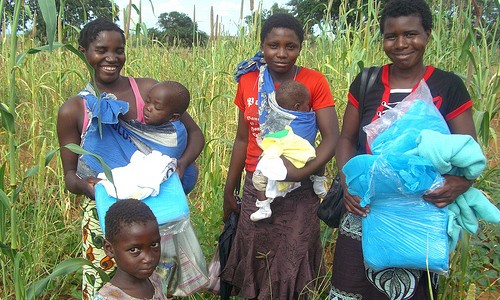
Distribution of mosquito nets - Mukuni Chiefdom

World Malaria Day: Distribution of mosquito nets – Mukuni Chiefdom

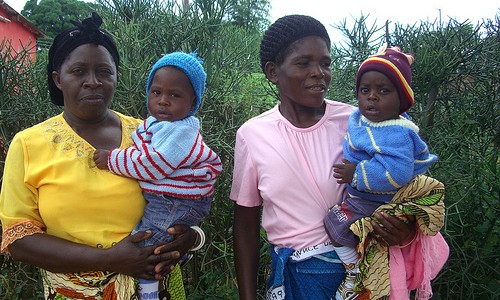
Sadly I do not see very little of this funding reaching rural communities where we work. During my recent trip to Zambia I came across more new cases of malaria than in previous years. The government are supposed to provide mosquito nets to all children under five and pregnant women. The Mukuni Chiefdom has a population of 20,000, since January 2011 the community has received only 100 nets from the Department of Health. Thanks to a generous annual donation from Saga Charitable Trust we run a malaria prevention program in the Chiefdom. In March we distributed 400 mosquito nets to outreach villages as well as purchasing malaria testing kits , which are equally important. Early testing is vital especially in this region where P. falciparum is prevalent and  may result in death within hours or a few days of infection. It is also crucial that the people are educated about the dangers of malaria as early symptoms can appear to be flu-like making it imperative to seek immediate medical advice if there is a fever. If caught in time it can be easily treated.

Twin boys from Chibale contract malaria

Twin boys from Chibale contract malaria

Today I will be attending an event to mark World Malaria Day at the Commonwealth Secretariat. A number of key speakers will address and consult on global malaria. Topics will include malaria control, women and children’s vulnerability to malaria and most alarmingly the growing resistance to malaria medications. Until there is a cure prevention is essential, providing mosquito nets and malaria testing kits will continue to be one of our main priorities. You can help us!  Donate a mosquito net for as little as £5, which could save the precious life of a child.

post

Volunteering at Mukuni

The Butterfly Tree is a charity and not a volunteer business. However we do allow dedicated and committed people to volunteer for the charity at Mukuni Village, seven kilometres from the mighty Victoria Falls. Unlike businesses there is no charge for this opportunity though we do ask participants if they would like to give a donation to one of our many projects or take with them to Zambia items for the school or clinic. Over the past four years we have had a number of people from all walks of life who have made a substantial contribution, which has helped both the charity and the community in Mukuni. These include students, individuals and professionals from the US, Canada, Australia, the UK and Finland.

Volunteering at Mukuni

Volunteering at Mukuni: James from the UK and Petteri from Finland

This is how it works – we are very flexible as you will be independent, though you will be working alongside a teacher, medical officer or a member of the team. There is no time scale so you may stay as long as you wish. If you are interested in working at both the clinic and the school we suggest you help at the clinic in the mornings and school in the afternoons. Please note that the schools are closed for the Christmas break during much of December, a month at Easter and for the month of August. There is also the opportunity to assist with community-based projects such as constructing houses, painting classrooms, holding workshops or working with women’s groups.

Income-generating enterprises

Wendy, an accountant, gave advice to women on income-generating enterprises

There are no facilities or accommodation available in Mukuni therefore we recommend that you stay in Livingstone at either of the backpackers places: Fawlty Towers or Jolly Boys  or Chanter Lodge if you want somewhere reasonably priced. For those seeking a more up market type of accommodation our partners Sun International have two hotels next to the Victoria Falls and Stanley Safari Lodge half way between the Falls and Mukuni. These arrangements along with flights will be your responsibility. To get to the village you can either take the local bus, which changes at the Victoria Falls and takes about an hour – it’s around £3 or £4 return or you can do a deal with a local taxi to take you for around £15 return. Zambia is very safe compared to most countries and the local people are extremely humble, friendly and obliging.

Mutsa Volunteering in Mukuni

Mutsa from London spent four months teaching peer education for HIV Prevention

All volunteers have loved this life-changing experience vowing to return and many have joined our cause to help improve the lives of these vulnerable people. Besides working with the charity the area has an abundance of activities including safaris, white water rafting, elephant-back riding and micro-liting over the Victoria Falls. It is also close to the Botswana border where some of the best game in Africa can be seen at Chobe National Park. If you would like to volunteer for The Butterfly Tree please send an email to jane@thebutterflytree.org.uk

Check out our news updates on Facebook and Twitter.

post

Newsletter April 2012

I have just returned from Zambia after three full weeks overseeing The Butterfly Tree projects and sourcing new ones. We are now covering areas some 100 kilometres from Livingstone, reaching out to villages in very remote areas where progress is being made in both health and education. However much more needs to be done in areas where poverty is extreme, parents are dying from AIDS related illnesses and children are hungry. Mukuni Village, due to its location, close to Livingstone and the border of Zimbabwe, suffers more than most. The HIV and AIDS statistics are incredibly high and more and more children are orphaned through this destructive disease, stressing how essential it is to continue with the orphan sponsorship program.

Old classroom at Silello, Zambia

Old classroom at Silelo

New School at Matengu, Zambia

New School at Matengu

I am pleased to report that it is not all ‘doom and gloom’ much progress is being made. The highlight of my trip was visiting the four new schools that we have constructed thanks to a hugely generous grant from the Jersey Overseas Aid Commission – three opened in January and one will open next term. All of these schools are complete with teachers’ houses and latrines with the addition of a bore hole at Malima. For the Mandandi community this is a real advancement, previously 46 children had never been to school and over 30 attended only once a week due to the long distance they had to walk to the nearest school. Each new school has received a substantial amount of stationary and equipment as a result of a grant from the British and Foreign School Society. We aim to make these schools sustainable by providing seeds to produce feeding programs as well as uniform making projects to create income generation.

Another highlight of the trip was when the new British High Commissioner, James Thornton, paid a visit to Mukuni Village. The Commission had selected The Butterfly Tree projects out of all the NGO’s operating in the Livingstone area.

New school at Silelo, Zambia

New school at Silelo

New school at Mandandi, Zambia

New school at Mandandi

Further improvements include a shelter for boarders, funded by Saga Charitable Trust, which means the older pupils can remain in Mukuni during the week. The special education project is so successful that the Provincial Department of Education has got involved. Fountaindale School has once again provided a teacher exchange program. During their recent visit the UK teachers hosted workshops for the Province, using Mukuni Special Education as a model for this exercise. It is a joy to see local children with both mental and physical disabilities receiving a sound education. The orphan sponsorship has recently had a boost, many sponsors have either visited Mukuni or found us on the internet with over twenty more children being able to join the program. Virtually 100% of our sponsored orphans recently passed to go to the high school and twenty orphans, who completed grade 12, have been able to participate in vocational courses, part of the grant from the British and Foreign School Society. A further teacher’s house at Mukuni High School has been completed as a part of a considerable donation from ENRC Marketing.

Special Education Children, Zambia

Special Education Children

Sponsored Orphans in Ngandu Zambia

Sponsored Orphans – Ngandu

Mukuni Health Centre has had a ‘facelift’ with the inclusion of a women’s shelter, kindly funded by The Besom who also funded a teacher’s house at Ngandu Basic School. Major health issues persist and once again we have funded treatment for several children. I was saddened to learn that there has been an increase in new cases of malaria during this year’s rainy season. We distributed 400 of Saga’s mosquito nets to outreach villages targeting children under five and pregnant women. While attempting to reach an area in the Sikute Chiefdom, where we are to build a new school at Sibbulo, the journey proved to be too arduous. After several hours we failed to reach the village as the track was overgrown and many areas were water-logged. It was a very frustrating journey and when we got our second slashed tyre, we could go no further. By 7.30pm the mosquito were at large – despite having insect repellent, the insects attacked through our clothing. The three of us were covered in bites and it was hours later when the rescue vehicle arrived, eventually we touched base at 12.30am. This journey confirmed just how inaccessible some of these villages are and how lucky we are to have access to anti-malaria medication.

Distribution of Mosquito Nets in Zambia

Distribution of mosquito nets

World Women's Day Zambia

World Women’s Day

As always I hosted an event for International Women’s Day – over 100 women, including the Bedyango, Chieftainess of Mukuni, were in attendance. The theme was ‘Inspiring Futures, Connecting Girls’ and the agenda included topics on how to reduce the number of teenage pregnancies, women’s health issues and sustainable income-generating activities. A challenge was offered for groups of women to submit projects and the most original would be given start-up costs and advice. I was assisted by Wendy Calloway, an accountant who is both a donor and volunteer for The Butterfly Tree and kindly offered to give all the groups expert business advice. We have had a number of volunteers who have worked at both the school and clinic, most valuable are the seven-year medical students from Sydney University and Margaret and Casey from Oregon who returned for a fourth time to develop their goat’s milk project. We are very grateful to all our donors, fund raisers and volunteers who have helped us to reach out to many more rural communities. Funds are in place for the construction of a further school, a clinic and a Music Centre.

If you would like to further support any of our projects we have a new donate facility with British Telecom.

Join us on Facebook and Twitter for daily news bulletins.

post

World Water Day 2012

Today is marks World Water Day and this year’s theme is ‘Water and Food Security’. Without water we cannot survive. The United Nations states the following’ drought caused more deaths during the last century than any other natural disaster, and Asia and Africa rank first among continents in the number of people directly affected’. Many developing countries suffer long periods of drought, food shortages are common place and children are undernourished. Whereas in the west our fridges are full and the water pours from our taps in abundance – much of it is wasted. The more food we eat the more water we need for our crops and livestock. It takes approximately 1500 litres of water to produce 1 kg of wheat, but it takes 10 times more to produce 1kg of beef. We expend vast amounts of water for cooking, washing, bathing, cleaning, watering gardens, car washing… the list goes on and on.

World Water Day

World Water Day: A dry stream – Mosokotwane Chiefdom

For those developing countries that rely on local food production water is a precious commodity. This month sees the end of the rainy season in Zambia. The African bush is green and lush, the crops are flourishing and the streams and rivers are over-flowing, but this month will see the last of the rains until October. It is crucial for the local people to grow sufficient maize, which is dried and bagged to last through the dry season. However here water cannot easily be stored and unless a community has a bore hole water shortage becomes apparent. Many areas in Zambia are without access to safe, clean water and have to rely on streams containing bacteria and crocodile-infested rivers. This water has to be used for drinking, washing, crop irrigation and livestock. When the streams run dry between August and October families walk many miles have to find a water source.

To ease the situation in the Kazungula District The Butterfly Tree has added a bore hole to every school it is supporting. This gives the children access to safe, clean water and the school to have a sustainable feeding program by growing maize and vegetables. To date we have funded seven bore holes for schools and three for local communities, a further bore hole will shortly constructed at Mukuni Village. Many more are need in these remote villages, especially where hunger widespread. Diarrhoea in all ages is common and in infants it can be fatal.

New bore hole Mukuni Zambia

New bore hole & Indian Hand Pump for Malima School – Mukuni Chiefdom

Support World Water Day by conserving our water and supporting people who suffer from water shortages and those who have no access to safe, clean water.

post

Charity Giving

One of the most important considerations when giving to charity is to ensure that the maximum amount goes directly to the cause and this is something that we continue to strive for. I repeatedly hear people say that they are through with giving to charities that deduct a sizeable amount of a donation to cover administration fees. Other hidden costs cover salaries, personal expenses and outlay for restructioning. Obviously the larger charities have to generate vast amounts of money and have high overheads but so much money is being misused. Last year it was revealed that one of the better known charities gave their Chief Executive and Deputy Leader over £800,000 in pay-offs.

New school for Silelo pupils

New school for Silelo pupils

The Butterfly Tree prides itself in being able to capitalise on a donation and use it in the best possible way that will benefit the rural communities we support in Zambia.  For the past six years we have been able to use donor funds to initiate projects such as building classrooms and clinics, bore holes, malaria and HIV and AIDS prevention programs, community housing and orphan sponsorship. No administration costs or personal fees have been deducted. Our loyal and committed teams both in Zambia and the UK work on a volunteer basis, dedicating their time and energy to improving the lives of those less fortunate. Administration fees in the UK are covered by the Chairman and we do not rent office space in either country.

Beneficiaries of Charity Giving

Beneficiaries of Charity Giving – three young boys from Mukuni Village

This month we have changed our donation facility, as the one previously used has now added costs. The new facility is Mydonate, which is administered by British Telecom and provides us with a free, secure service and an easy-to-use method. We hope that this will be a great benefit to both The Butterfly Tree and our donors. For anyone wanting to create their own fundraising page Mydonate can also be used. Sporting challenges, events, school fundraising initiatives can benefit this method.

We are also registered with Just Giving, we pay monthly fee for this facility so anyone creating their own page can link to The Butterfly Tree.  For American Donors who require a 501 (c) 3 facility we are listed on the US GlobalGiving site. There are many other ways to help raise money for our cause, these include Giving Lots – charity auction site, Everyclick – a search engine that donates to charity every time you search on the web and we are also listed on Ebay for Charity. If you would like more information please contact: jane@thebutterflytree.org.uk

To make a donation please use the Mydonate service now listed on our website.

post

HIV and AIDS Prevention

Virtually all the work of The Butterfly Tree revolves around the HIV and AIDS orphans. At Mukuni Village almost 50% of the school children have lost one or more parent putting a huge burden on elderly grandparents and guardians and its the same story in every village. We believe that the only way to make the change is to target the younger generation and teach them all about HIV and AIDS prevention. Last year we were delighted to welcome Mutsa Marau to our team as a volunteer from London. Mutsa has a BA in Anthropoly and Socialogy, a MBA in International Business Practice and is a trained youth worker. She has written her own HIV and AIDS prevention program to train peer educators amongst school children, for the past four and a half months has worked with pupils at Mukuni.

HIV and AIDS Prevention Co-ordinator - Mutsa Murau

HIV and AIDS Prevention Co-ordinator – Mutsa Murau

Now these dedicated young people are ready to ‘spread the word’ and are reaching out to other rural schools. They are educating their peers on the dangers of HIV, how to prevent it, the importance of voluntary testing and how to live with it if you are unfortunate to have been born with the virus. Other issues include teenage pregnancy and other sexually transmitted diseases and surrounding issues. With our support their aim is to reach out to all the schools we are involved with and beyond. Several of these educators are from The Butterfly Tree orphan sponsorship program and it is wonderful to see the progress they have made as individuals and a group.

Sponsored Orphan

Natasha – Peer Educator and orphan sponsored by The Butterfly Tree

Another volunteer, Brendan Poynton, is currently raising funds to build a Music Centre at Mukuni. This will give these vulnerable HIV and AIDS orphans an opportunity to hold concerts and social activities to raise funds and awareness to help the fight against this devastating disease. Through several fundraising events Brendan has almost reached his target and has

now organised a charity auction, through MUSIC EARTH RISE, to complete his task. There are some amazing lots including a guitar signed by Eric Clapton and a print signed by Ronnie Wood. If you would like to bid for any of the items please use the following click on Music Earth Rise Auction.