post

WORLD MALARIA DAY 2018 – MAKING A DIFFERENCE

According to the World Health Organisation in 2016, there were an estimated 216 million cases of malaria in 91 countries, an increase of 5 million cases over 2015.

Malaria deaths reached 445 000 in 2016, a similar number (446 000) to 2015.

With the above statistics it’s hardly surprising that global organisations and drug companies have stepped up their efforts to find a cure and a vaccination to fight malaria.

Working in some of the remotest communities in Africa it is easy to see how a case of malaria can spread, and quickly turn into an outbreak. With poor medical facilities, combined with the lack of malaria testing kits and antimalarial drugs, the nurses and medical officers have a constant battle in trying to control malaria.

NEW HEALTH CENTRE FOR SIKAUNSWE UNDER CONSTRUCTION

Until a cure is found, or a vaccination is offered on a mass scale, malaria prevention is crucial to avoid contracting this potentially deadly disease. Mosquito nets are the most essential form of protection and a must for infants and pregnant women. Sadly, people in developing countries cannot afford to buy them and their governments largely rely on International Aid.

DISTRIBUTION OF MOSQUITO NETS – CHUUNGA VILLAGE

Over the past 12 years we have distributed thousands of mosquito nets  as well as funding malaria prevention workshops, throughout the Kazungula District of Zambia. In addition to the nets, in 2015 we started using Vectorcide’ s safe insecticidal coating and larvicide granules. The results have been quite remarkable, with the number of malaria cases being considerably reduced.

RELEASING SAFE LARVICIDE GRANULES INTO MOSQUITO BREEDING GROUNDS

After much success in Mukuni Chiefdom, in 2017 we ventured into Moomba Chiefdom, some 300 km from our base. We were told that no other charity had ever offered support, and that there was a high prevalence of malaria, with 46% of the population being infected. Following a distribution of mosquito nets in July we applied the insecticidal coating and larvicide granules in December last year.

MOSQUITO NETS DISTRIBUTED IN MOOMBA CHIEFDOM

In January and February 2018 only 51 cases of malaria were recorded, compared to 502 in 2017. The number shows a reduction of 90%. We were recently told by the Ministry of Health that a record had been broken – ‘Moomba has recorded the lowest ever number of malaria cases.’ Our aim this month is to ensure that the entire Moomba population is protected.

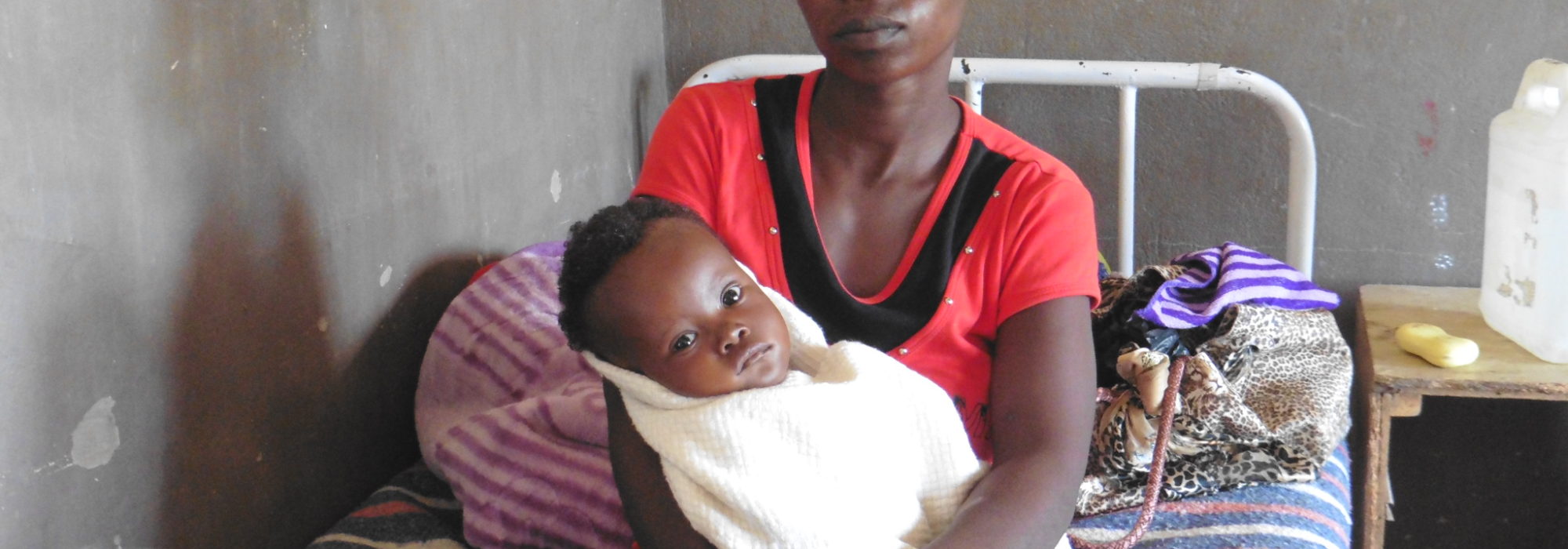
MOOMBA CHIEFDOM – INFANTS MUST BE PROTECTED AGAINST MALARIA

By offering communities mosquito nets, applying safe insecticidal coating on the walls of their homes, and dispersing larvicide granules in ponds and streams, universal coverage is provided. We have proved that this is one of the most effective and advanced ways of helping to eradicate malaria. The coating works far better and lasts much longer (up to two years) than indoor residual spraying, which is effective only for 3 to 6 months.

SAFE INSECTICIDAL COATING IS PAINTED ON THE WALLS OF DWELLINGS

None of this can be achieved without donor funding and experts on the ground. We are extremely lucky to have Sibeso Maseka, an Environmental Health Technician, on our team of volunteers in Zambia. She continually trains and motivates community health workers to be aware of the importance of early testing and administering treatment to prevent complications. These local people play a crucial role in the success of this programme.

We recently moved into Nyawa Chiefdom to target new areas that are recording high numbers of malaria cases. 650 mosquito nets have been donated and three villages are receiving the new intervention.

DISTRIBUTION OF MOSQUITO NETS – NYAWA CHIEFDOM

The Butterfly Tree is making a small, but significant difference in the fight against malaria, but we need more funds to be able to reach out to the most vulnerable areas.

A mosquito nets costs just £4 and a house can be coated for £15. Please donate to this vital cause: https://thebutterflytree.org.uk/get-involved/online-donations

Follow us on Facebook and Twitter

post

Challenging Journeys to Visit Health and Education Programmes

My recent trip to Zambia was probably the most challenging to date mainly due to the continued rainy season. Global warming seems to be taking its toll on the nation, most especially in the Southern Province. After barely no rainfall in December and January, February and March certainly made up for it, though it came too late to salvage the withered crops. Later planting also suffered after the heavy rains caused severe flooding.

CROPS PERISHED THROUGH LACK OF RAIN IN JANUARY

Driving off road can often be hazardous at best, but more so when you are heading out to schools where bridges and streams must be crossed. Every time I drive to Nyawa more of the notorious bridge has been washed away, but on one occasion a whole section of it had disappeared after a heavy downpour the night before, making the 100 km trek a waste of time! Not to be defeated, I returned the following week and pleased to see that the community had attempted to reconstruct the bridge, we only made it to Bunsanga and Nyawa as the streams on the track to Muchambila and other schools were too high to cross!

THE BRIDGE ON THE ROAD TO NYAWA COLLAPSED AFTER HEAVY RAINS

It’s always a joy to visit this area and know that the projects we are funding are really appreciated and making a lasting change. The Nyawa people are hardworking and encourage their children to be educated. We always receive a warm welcome and the people readily offer free labour for our constructions. Currently we are further developing Muchambila Junior School with the addition of a teacher’s house, Singwamba with a classroom block, using funds donated by George Spencer Academy, and for Bunsanga, the community now has a new school thanks to Attraction Tickets Direct offering further support.

BOREHOLE AT THE NEWLY BUILT BUNSANGA SCHOOL

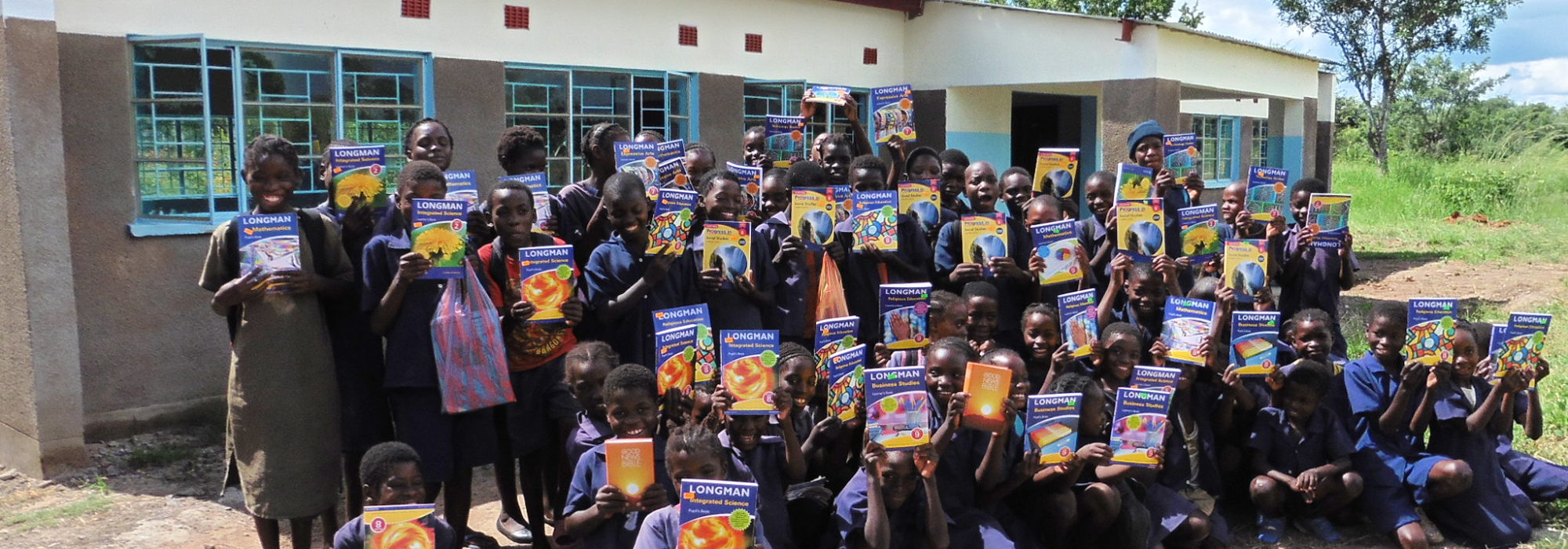
In Mukuni Chiefdom Chaba School has a new classroom block and latrines after another grant was approved by the British and Foreign School Society. The Science laboratory at River View School is taking shape enabling this the school to become an examination centre, which save the pupils the 60 km journey to sit their exams. River View and Chaba as well as Mambova Schools were given texts books donated by the Dawson Group.

CHABA SCHOOL – NEW CLASSROOM BLOCK AND TEXT BOOKS

On the further education front it was great to catch up with our young peer educators who are all engaged in skill-based courses. Besides learning to become builders, electricians, plumbers and tailors the group continue to volunteer for The Butterfly Tree, Mafian and Natasha taking leading roles within the charity. This talented group have really impressed me with their compassion and commitment to helping the cause.

THE BUTTERFLY TREE YOUTH GROUP ATTENDING COLLEGE COURSES

For the communities four more houses were donated by Motive Real Estate. It was great to again meet up with John Staab, the company founder, who is as keen as ever to improve the lives of widows and orphans. His partner, Jessica participated in a workshop for rural women. One of our UK volunteers, Valerie Redfern, joined me for part of the trip and together we distributed hundreds of Inner Wheel Club’s knitted blankets, jumpers and toys to villages throughout the District. A wonderful donation from Stratford-upon-Avon Reformed Church paid for further blankets and maize, handing these out to the elderly people was a humbling experience.

MAIZE AND BLANKET DONATION TO THE ELDERLY – MUKUNI, MACHENJE AND KAMWI

Despite all the challenges, as always, the trip was so worthwhile. Seeing first-hand how The Butterfly Tree’s work continues to improve the lives of some of the poorest people on the planet makes me want to do so much more. Funds are now in place for more classrooms, boreholes, and the new clinic at Sikaunswe, funded by GOAC, is underway after a delay caused by the rains. What made the trip even more rewarding was hearing that a record had been broken in Moomba Chiefdom. After implementing our malaria prevention programme ‘the lowest ever number of malaria cases had been recorded for the past three months!’

Jane Kaye-Bailey

Follow us on Facebook and Twitter