post

Orphan Sponsorship and Child Protection

As many of you know The Butterfly Tree has successfully run an orphan sponsorship programme since 2006. Thousands of orphans have benefitted from our support, which includes better education and health facilities, access to safe water and school feeding programmes. All our work revolves around vulnerable children in rural areas of Zambia.

RIVER VIEW SCHOOL – 1,250 PUPILS HAVE ADVANCED EDUCATION FACILITIES

Due to the recent allegations that have come to light concerning Oxfam volunteers, we would like to assure you that we take Child Protection very seriously and do everything in our power to ensure that the children we support are safe. Because of these issues we are currently updating our Child Protection Policy, which will shortly be published.

YOUNG RURAL CHILDREN – MUKUNI CHIEFDOM

Our volunteers in Zambia are made up of local people, most of them have been with us since the founding of The Butterfly Tree. The orphan sponsorship programme is overseen by local women and school teachers, with the exception of Kamwi School, where Mafian, a former beneficiary, checks on the welfare of orphans and sources new ones that need support. The peer education programme for HIV prevention is organised by former sponsored orphans.

MAFIAN – FORMER SPONSORED PUPIL OVERSEERS ORPHANS IN KAMWI

Most of our UK volunteers help with administration and fundraising only, and do not work ‘hands on’ in Zambia. All of us that do visit Zambia, and other volunteers, including international ones, have to produce a DBS or the equivalent from their country, and must be dedicated to helping the cause rather than using it as a holiday.

LEAH – FORMER VOLUNTEER IN ZAMBIA NOW A MEMBER OF THE UK TEAM

For the past ten years we’ve welcomed an array of teachers, nurses, social workers and business people who have provided invaluable assistance within the communities, schools and clinics. They are accompanied by members of The Butterfly Tree, school teachers or medical officers. To strengthen our aim to protect children and vulnerable people we are also updating our criteria and selection process, and will only accept those volunteers who have something worthwhile to offer.

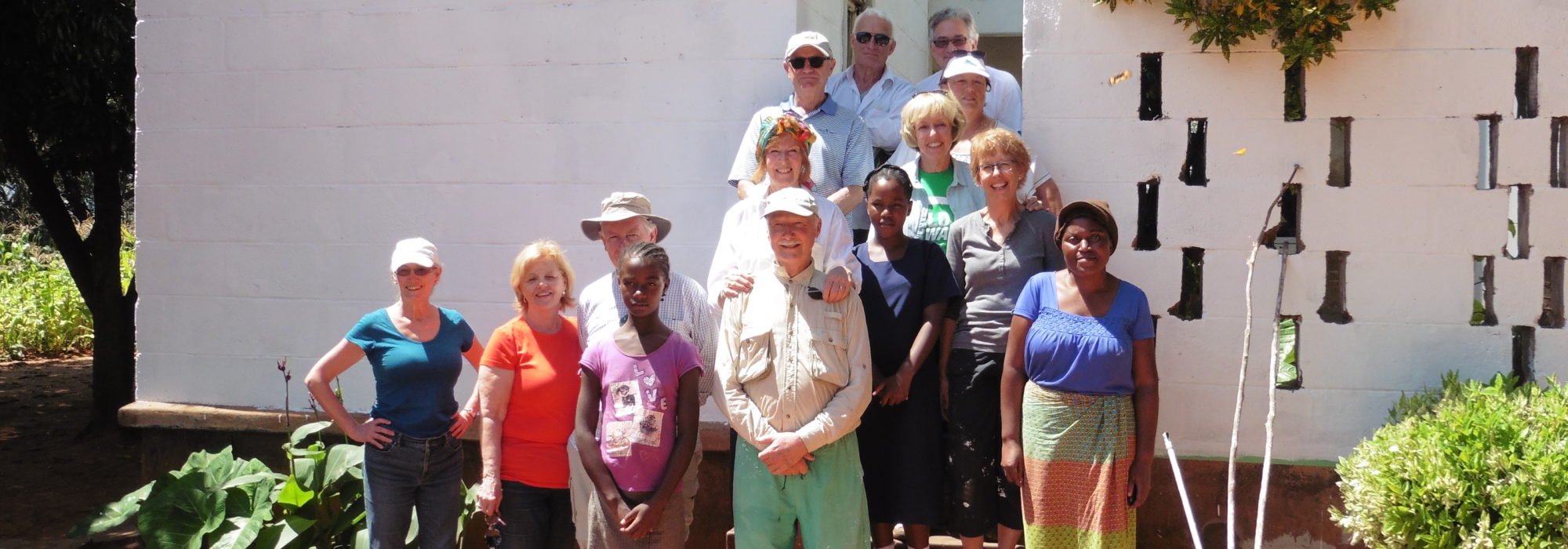
VOLUNTEERS – CANADIAN & AUSTRALIAN VOLUNTEERS REFURBISHING MUKUNI CLINC

On a positive note – at the start of this new school year in Zambia we have offered sponsorship to many more needy children thanks to gaining new sponsors, as well as existing donors, including the Mukuni Village Trust, Australia, and others that have agreed to support an orphan after their original pupil completed school. Though the orphan’s results are not always the best, many of these young people have gained a sound basic education, progressed to further education or sought employment.

MUKUNI HIGH SCHOOL – PUPILS ON THE ORPHAN SPONSORSHIP PROGRAMME

We apologise to those of you who are awaiting updates and details of new orphans, and will be in touch as soon as the Child Protection Policy has been approved. Thank you for your patience and understanding.

Follow us on Facebook and Twitter


post

Malaria Prevention – Moomba Chiefdom

Moomba Chiefdom, a remote area in the Southern Province, is 300 km from Livingstone. Moomba Rural Health Centre is 125 km from the main road, tracks are mainly sandy, others are clay, which makes the area inaccessible during the rainy season.

There is a high prevalence of malaria in the region, last year 46% of the population contracted malaria, the highest figures in the Kazungula District. In 2017, a request for assistance was made to The Butterfly Tree by the Zambian Ministry of Health.

The following activities took place:

July 2017 – four members from The Butterfly Tree drove to Moomba Rural Health Centre to access the situation and to distribute mosquito nets to meet the government’s shortfall.

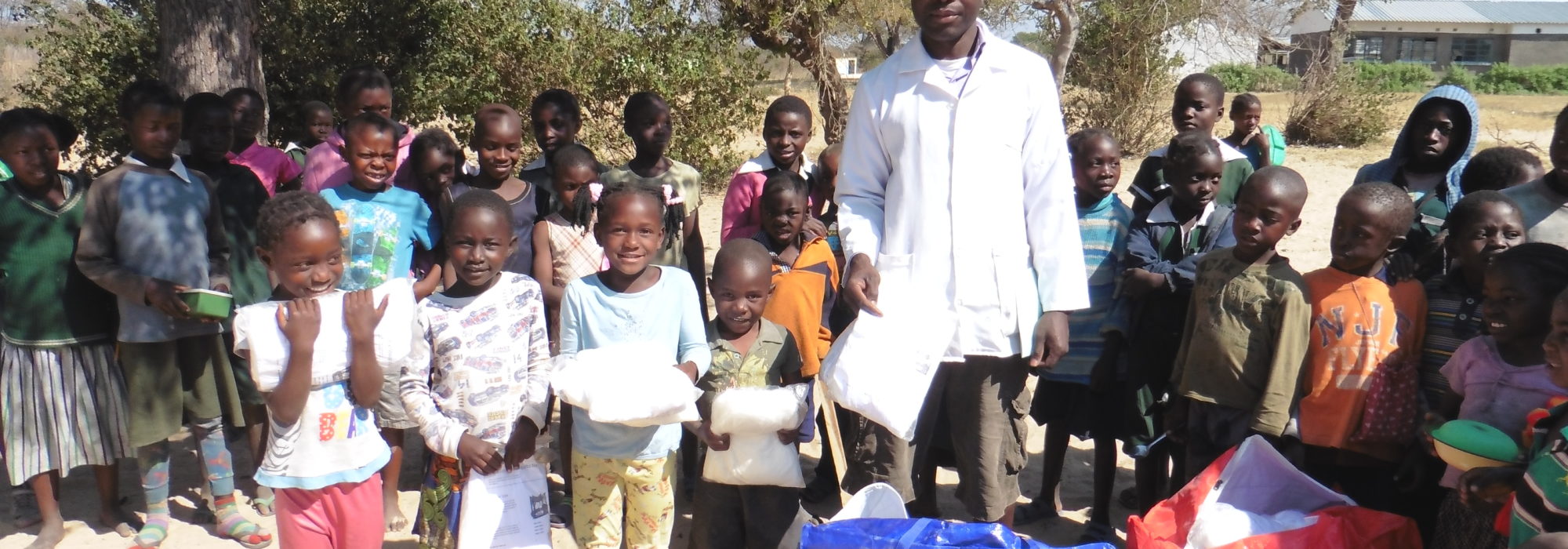
DISTRIBUTION OF MOSQUITO NETS – MOOMBA HEALTH CENTRE

November 2017 – six days training of volunteers, application of paint using an insecticidal coating, dispersal of larvicide granules.

PROTECTION AGAINST MALARIA

The team comprised of two Environmental Technologists, one is also a volunteer for The Butterfly Tree, ten community volunteers and two further volunteers from The Butterfly Tree.

A total of 600 structures were painted with insecticidal coating, in six out of fourteen zones. All health posts throughout the Chiefdom were covered. Once a mosquito lands on the surface it will fly off and die. Larvicide granules were placed in all areas where there is stagnant water, pools and streams. These were identified as breeding grounds for mosquitos. The larvicide is used to prohibit the larva from developing into mosquitos. It is not harmful to the environment, and both products are harmless to humans, animals and fish.

The Ministry of Health are closely monitoring the project.

December 2017 – five days were spent coating an additional 631 structures in six further zones. Granules had been previously distributed in all fourtenn zones.

DISPERSING LARVICIDE GRANULES

We are pleased to announce that we now have a donation to do a further distribution in the two remaining zones. It is hoped that this will be done in the next week, subject to accessibility. Once this has been implemented Moomba Chiefdom will be in a unique position, with universal coverage, aiming to prevent new cases of malaria and helping to save lives.

A WHO Consultant visited Mukuni Rural Health Centre, where we started using the intervention in November 2015. The Consultant wanted to learn more about the success we have experienced and why such a small charity as The Butterfly Tree has achieved so much in the field of malaria prevention. This is due to continual funding of mosquito nets, malaria prevention workshops and most recently the new initiative. It is also as a result of having a dedicated team of volunteers, most especially Stain Musungaila and Sibeso Maseka, who manage this programme in Zambia, and to our generous donors, without them, none of this could have happened.

Challenges

  • Accessibility and condition of roads and tracks. Only 100 km is a good road, 75km is on roads with deep potholes, and from the main road Moomba Health Centre it is 125 km and is mostly sand, which is deep in some areas. Several of the outreach villages are a further 45km from the health centre.
  • Distance between villages and from Moomba Health Centre.
  • Temperatures soaring 40 degrees in November and December.
  • Insufficient funds to provide protection for two zones.

Achievements

  • Every household welcomed the intervention., with 100% acceptance. The normal use of Indoor Residual Spraying, using harmful chemicals, is often refused by a percentage of community members.
  • Positive feedback is already showing an improvement. January to June is the peak time for malaria. To date no new cases of malaria have been reported in the areas of application.
  • Cases have been  reported in the two zones, which were not covered.

1,231 STRUCTURES HAVE BEEN COATED IN MOOMBA

A further donation, received this week, will be used to cover areas of Mukuni Chiefdom as it is over two years since the first application was made.

Last week the following interview was posted on the website of Crisis-Response, which is great PR for the charity, to read it click this link.

Next month we aim to start the programme in Nyawa Chiefdom by coating structures in two villages and larviciding. We have recently donated funds to purchase 800 mosquito nets for Nyawa Rural Health’s Centre’s shortfall.

Many thanks to everyone, namely St James Place Foundation, North Worcester, Stratford-upon-Avon and North Bournemouth Rotary Clubs, Inner Wheel Clubs, Nick Bou-sliman, and all the individuals who have helped us to make a small, but significant difference in the fight against malaria.

Follow us on Facebook and Twitter