post

October Newsletter

I recently returned home after another rewarding visit to Zambia. It is hard to believe the progress we have made. What started off as helping a handful of orphans has now expanded to over twenty schools, seven clinics and more than 100 villages in four Chiefdoms, throughout the Southern Province of Zambia. The distance we are covering is a radius of 200 kilometres from base and thousands more orphaned and vulnerable children are receiving a sound education, improved healthcare and drinking safe, clean water.

CIMG8784

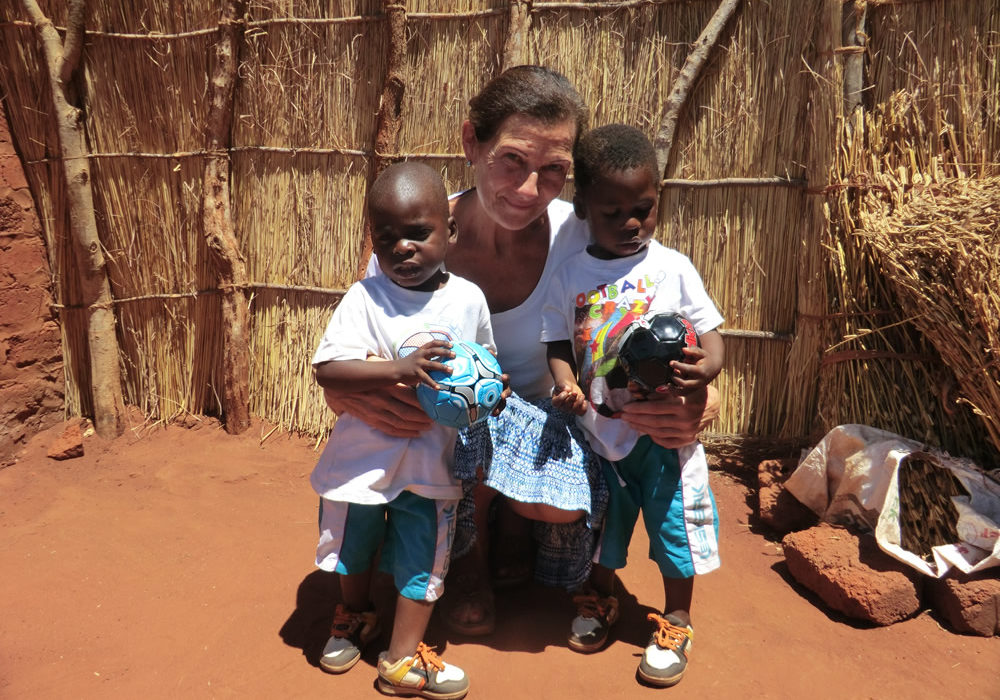
Jane with Kamwi twins, Elvis and Vincent now three years old

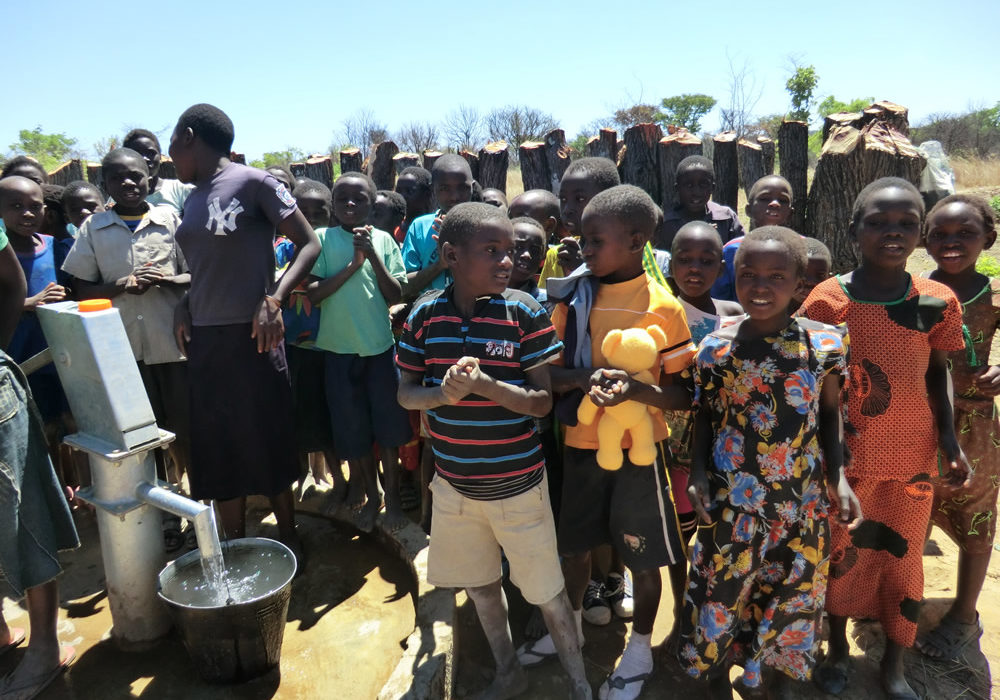
Bore holes have been installed at Kauwe and Muchimbala schools with a third one about to be completed at Kanimbwa. Not only do the pupils have access to safe drinking water, but the bore holes will be used to irrigate crops for much needed feeding programmes. I was horrified to learn that some of the food, provided by the World Food Programme, is rotten by the time it reaches the schools.

One Head teacher reported that this year the food provision had been delivered for term one, the second term the maize was stale and the beans were mouldy. When the Head complained he was told by the distributors ‘beggars cannot be choosers – they can eat it!’ Nothing was received for term three. It is heartbreaking, knowing that young school children have no food during the day. Many of them leaving home as early as 4am to return twelve hours later, on any empty stomach. Next month we will increase the number of donated seeds to support this project.

CIMG9064

New bore hole and Indian hand pump for Kauwe Basic School

As the rainy season approaches so does the increased risk of contracting malaria. Though prevalent all year, malaria cases increase between November and March. I spent two days distributing mosquito nets to outreach communities. Due to the remoteness of these villages the government do not spray the mud huts putting the people at great risk. Our malaria prevention programmed is vital. Thanks to Saga’s generous funding and most recently Health Express we have been able to cover much of the Mukuni Chiefdom and beyond. Since January no new cases of malaria have been reported in under fives and zero deaths caused by malaria.

CIMG9033

Malaria prevention – Ndele children receive mosquito nets

While I was in Zambia I was invited by Sky News to give a ‘live’ interview on the much anticipated malaria vaccination, which could be available as soon as 2015. Glaxo,SmithKline has developed the first ever vaccine and I was asked to comment on how effective this could be for our malaria prevention programme.

Malaria remains the biggest killer of man. Every year around 660,000 people, mostly children under the age of five in sub-Sahara Africa, die from this mosquito-borne parasitic disease.

CIMG9163

Malaria prevention – mosquito nets donated to Siachalwa Village

On another serious matter sadly the HIV and AIDS statistics remain far too high, at 27%, in the Mukuni and Livingstone areas. We are continuing our support for children with HIV, increasing our funding for workshops, specifically targeting school children. Mutsa Marau, our HIV prevention coordinator, will return to Zambia next month to offer peer education for HIV prevention. As always I was presented with a long list of orphans who need help. Our sponsor an orphan programme has supported hundreds of individual children in education.

CIMG9195

Orphan sponsorship – Enoch to be sponsored by The Butterfly Tree

Now it is back to raising funds for mosquito nets, classrooms, bore holes and orphan sponsorship through a number of planned initiatives. Our popular desk top calendar will shortly be available to order. In December we have the opportunity to get donations matched thanks through our partner the Big Give, through their Christmas Challenge initiative. Already we have £5000 in pledges, now we need to raise a further £10,000 in donations from 5th December. If we are successful, the £15,000 will be turned into a massive £30,000. Anyone who would like to help us reach our goal please contact jane@thebutterflytree.org.uk


post

Safe Water for Schools in Zambia

I am currently in Zambia visiting The Butterfly Tree projects. The temperature is 38 degrees and rising as the rainy season approaches. Not a drop of rain has fallen for almost six months and the earth is parched, the rivers are low and the streams have run dry. Earlier in the week, accompanied by Mupotola, the secretary to The Butterfly Tree in Zambia, I drove to the Nyawa Chiefdom. The village we were aiming for was Muchimbale, 100 kilometers to Zimba then a further 36 kilometers into the bush.

CIMG8691

Dry stream – Nyawa Chiefdom

Muchimbale has a small community school where children previously had to walk 5 kilometers every day to fetch water, which took 3 hours out of their time table. Thanks to a generous donor the school now has its own bore hole and it certainly was a joyful sight to see the children pumping and drinking safe clean water. In addition this donor has funded two double latrines for the pupils. In the same Chiefdom we have installed a bore hole at Kauwe Basic School through Just a Drop’s donor Epsom College. A third bore hole has been donated by Attraction Tickets Direct. Unfortunately, as yet, we have not been able to source water at Kanimbwa School. Such are the challenges when working in these remote communities.

CIMG8721

New bore hole and hand pump – Muchimbale Community School

Heading towards the Botswana border I drove with Martin, our ground operation’s manager, to Mambova to check on the women’s shelter we have constructed at the clinic. This is for women who live in outreach villages to come and stay at the clinic prior to labour, ensuring a much safer place to deliver infants. After donating some bandages and dressing, which I gave to the resident nurse, I drove to River View Basic School where we recently completed a special education unit, kindly donated by the employees at ENRC Marketing AG, Zurich. This will open at the start of the new school year in January when thirty children, who had previously never attended school, can be taught by trained government teachers. In the meantime mainstream pupils are using it to prepare for examinations as their existing classroom is a tent.

CIMG8627

New special education classroom for in January 2014 – River View Basic School

With only one week left before I fly back to the UK much has still to be done. The official opening of the new clinic at Mahalulu, the orphan sponsorship to update, mosquito nets to distribute thanks to Saga’s support to our malaria prevention programme and text books to buy. Most schools lack text books with some classes having only one to share among 60 pupils. At times the need is so overwhelming, but the progress we are making in the Kazungula District is considerable. During a recent survey on the Mukuni Chiefdom made possible by USAID and Share, The Butterfly Tree came out on top as the best contributor! Our work has now spread to the Chiefdoms of Musokotwane, Nyawa and Sikute.